I was 6 years old when I got my first pair of glasses. I don’t really remember the process—visiting the optometrist, choosing frames—but I can vividly recall our drive home after picking up my new specs. As I gazed out the window of our minivan, I was astonished to find that instead of fuzzy blobs, I could now see the individual leaves on trees. I could make out the texture of the tree bark and even the ripples in the water as we drove past the nearby reservoir. The world was so full of beautiful detail—and I hadn’t been aware of any of it.
According to a 2025 Gallup poll, only 35% of the American general public—a record low—are satisfied with the quality of public schools. Here’s where it gets interesting, though: When Gallup asked actual parents of K-12 students about the public education their own children were receiving, 74% said they were either completely or somewhat satisfied. In other words, people who are experiencing public K-12 education firsthand view it much more favorably than those who aren’t.
The truth is, lots of people have a very fuzzy view of public education. They can make out the basic shapes, but from a distance, they can’t see all the beautiful details that make public schools worth celebrating. That lack of perspective, in turn, fuels common misconceptions: that public schools are broken, that students aren’t being prepared for the real world, that private school and homeschooling are unequivocally better options. As champions of public ed, it’s our job to be the optometrists: to give our communities new frames through which to see public schools.
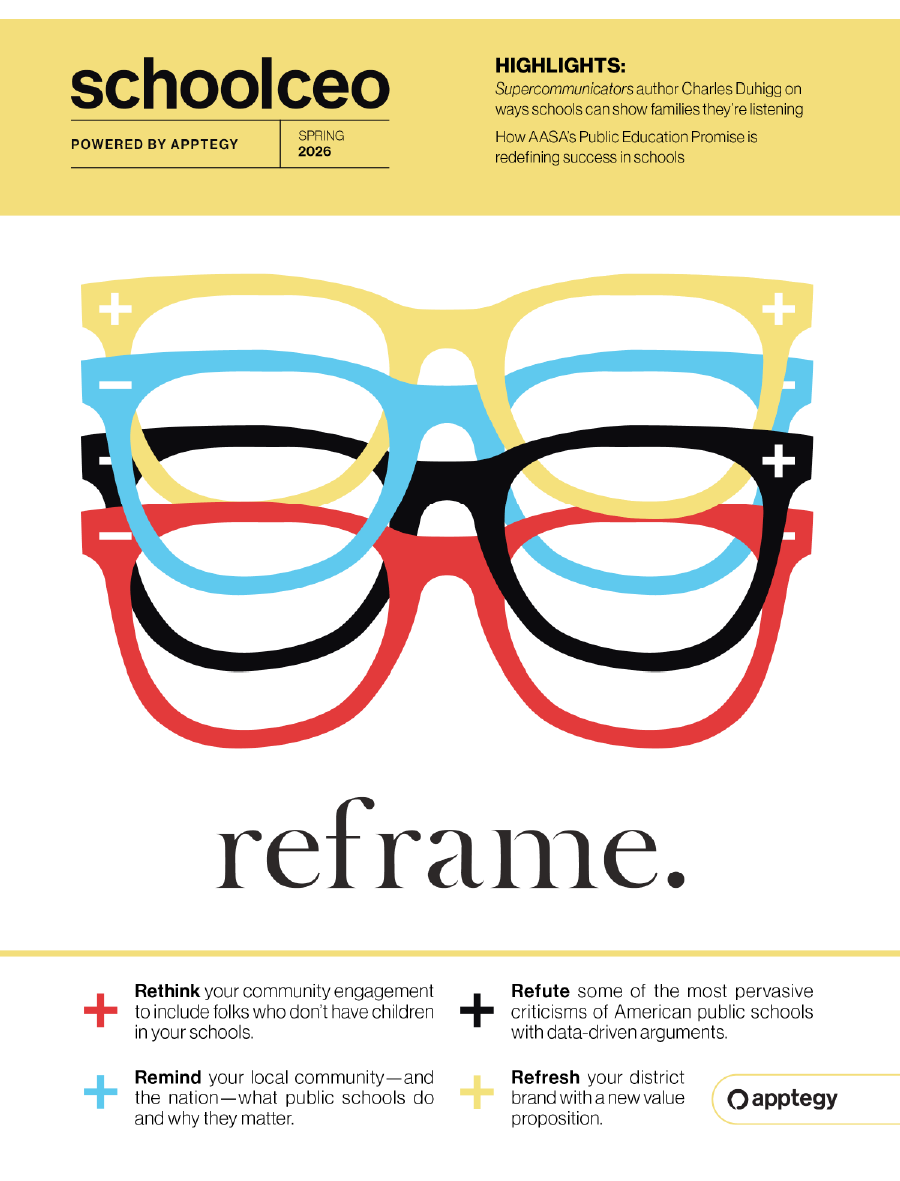
But how do we actually do that? How can we help people see our schools more clearly? Maybe it means tackling those common criticisms head-on, correcting the misconceptions and offering a different point of view. Maybe it means inviting members of your community—especially those without kids—into your schools for a firsthand look. Maybe it means rethinking how you talk about your job in public ed, or redefining school success to encompass more than test scores. We’ll show you how you can take all these steps and more in this issue of SchoolCEO.
—SchoolCEO Editor Melissa Hite in our brand-new Spring 2026 edition
One question for you
What is one of the most pervasive misconceptions about your schools—and how have you worked to reframe that perspective?
Email us at editor@schoolceo.com to let us know! We read every response, and your answers help shape future SchoolCEO content.
Two resources to help
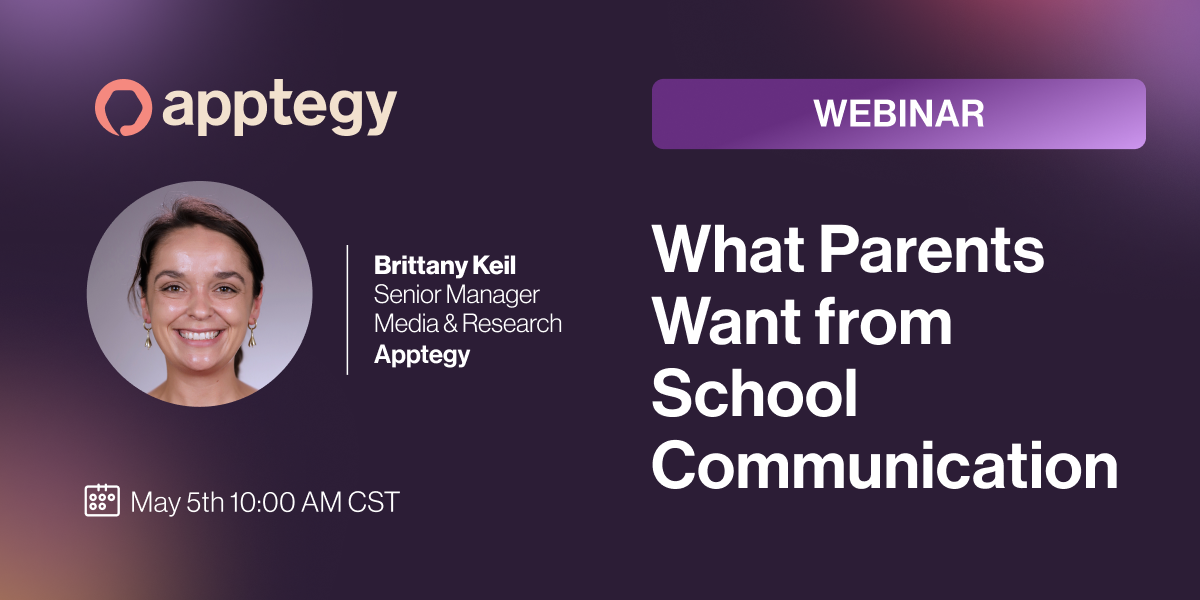
Parents and guardians don’t just have opinions about your district’s academic and extracurricular offerings; they also have preferences about school communication. And in an age of school choice, it’s more important than ever to deliver on those desires. Join our Senior Manager of Media and Research Brittany Keil Tuesday, 5/5 at 10 a.m. Central to explore what modern parents want from school communication—based on our groundbreaking survey of over 1,400 families. Register for the webinar here.
In the newest Spring 2026 issue of SchoolCEO on reframing perspectives, you’ll find talking points to counter misinformation about public education, examples of private sector companies who have reframed their value propositions, and strategies for more data-driven communication. You can read the full issue here.
Three ideas from the new issue to get you thinking

“If you want to draw people in, you really have to prove to them that you're listening. With any bureaucracy, it is natural for anyone outside of it to fear that they’re not being listened to or even considered at all. Families want evidence that you're paying attention, that you're hearing what they’re saying, that you can see things from their perspectives. That's where the most powerful moments of connection lie.” -Charles Duhigg, bestselling author of Supercommunicators, in “Prove You’re Listening”
“Definitions of success shape behavior. What we choose to measure, emphasize and reward sends powerful signals about what we value and what we expect schools to prioritize.” -AASA Executive Director Dr. David R. Schuler in “Keeping the Public Education Promise”
“A lot of people make assumptions about schools and school quality. People have believed that schools aren’t doing what they’re supposed to do since the 1950s—and yet there are students coming out of American public schools who are great thinkers and problem solvers. If we can just highlight examples of kids doing great things, that might remind everyone that there’s a lot of good happening behind school doors.” -Dr. Matthew Mingle, superintendent of New Jersey’s Warren Township Schools, in “They’ll Be the Judge of That”
/)