Since 1790, the U.S. Census Bureau has been trying to count every person in the nation. For most of that history, they worked under a quietly comforting assumption: send out enough forms, knock on enough doors, and you'll reach almost everybody.
By the second half of the 20th century, that assumption had clearly been disproven. Recent immigrants weren't filling out forms in English. Migrant farmworkers weren't home when enumerators came by. Families doubled up in single apartments were being counted as one household. People in deep poverty, people without permanent addresses, and people whose languages the Bureau didn't have forms for were being missed—by the millions.
So the folks at the Bureau changed how they worked. They drew specific "hard-to-count" enumeration districts. They hired bilingual census takers. They built partnerships with churches, food pantries, immigrant service organizations—any institutions that had relationships with people the Bureau couldn't find on its own. They'd stopped waiting for the hard-to-reach to show up and started going to them instead.
A lot of school districts communicate with the same flawed assumption. Send enough emails, hold enough open houses, put up enough surveys, and you figure you'll hear from the people who matter. But the parents already at the PTO meeting are often not the ones whose feedback would change anything. The families who are hardest to reach are the ones you most need to hear from.
The relative quiet of summer (hopefully) leaves you with actual room to think—room to ask who you've been missing entirely. Is it the single parent working two jobs who can’t attend school events? The grandparent who can't easily navigate your website? The family who doesn’t get school communication in their home language?
Taken all together, those families represent the gap between the community you think you're serving and the one you actually are. Bridging that gap means doing what the Census Bureau eventually did—meeting people where they already are, rather than waiting for them to find you. Sometimes that means closing a literal distance: holding a listening session in a different part of town than you have in the past. Sometimes it’s about closing a language gap: making sure everyone has access to your district’s communication, no matter what language they speak.
The Bureau's shift didn't just produce a more accurate count—it changed who got heard and, by extension, who got resources. The same is true for your schools. Before you can really serve everyone, you have to hear everyone.
One question for you
Which families have you been undercounting — and what would it take to reach them this summer?
Email us at editor@schoolceo.com to let us know. We read every response, and your answers help shape future SchoolCEO content.
Two resources to help
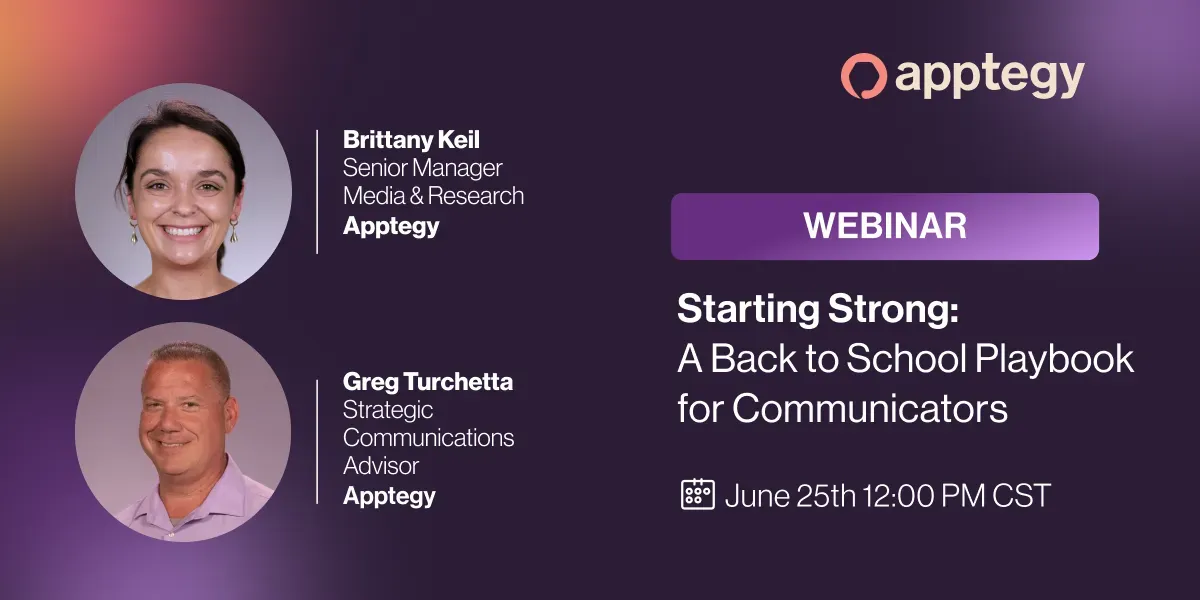
The back-to-school season rewards those who planned ahead—but most of us don't get that chance until the chaos is already underway. This Thursday, June 25 at 12:00 PM CST, SchoolCEO is hosting "Starting Strong: A Back to School Playbook for Communicators," a practical session on how to build the systems—content banks, templates, channel workflows, calendar planning—that let you stay proactive when everything around you is reactive. Whether you're a one-person shop or leading a full team, you'll leave with a clear framework for the season ahead, including how to tell your district's story right from the get-go. Register for the webinar here.
If you're serious about reaching your whole community, you need strategies that actually work—and a room full of peers wrestling with the same questions. SchoolCEO Conference: All In: AI, Brand, and Communications is September 28–29 in Dallas, TX, with keynotes from AI expert Rebecca Bultsma, messaging strategist Emma Stratton, and Emmy Award-winning communication coach Jessica Chen. We've just released our breakout session lineup—including sessions on two-way family engagement, what families actually want at each enrollment stage, and how to fix the communication systems that frustrate your community most. Advanced Registration closes June 30, so now is the time to lock in and save $100 off the general rate. See the full schedule and register here.

Three ideas to get you thinking
In-person conversation is a powerful way to communicate—but you can’t rely on it as your only avenue for two-way communication with families. Instead, think about communication that meets your families where they are—on their phones. According to 2025 data from Pew Research Center, 91% of U.S. adults now own smartphones, and that majority persists across demographic groups. Consider investing in two-way communication systems that revolve around smartphones—for example, a messaging platform that integrates with your district’s mobile app. (For more on building inclusive two-way communication, read “Talking Back” from our Winter 2025 issue.)
At Oregon’s Multnomah Education Service District, Director of Strategic Communications and Public Affairs Marifer Sager spearheads multilingual comms, outreach and engagement strategies. In our Q&A with her last year, we asked Sager: Why is language accessibility important? “Because we receive federal funds, we have a legal mandate to support those who need meaningful communication in other languages,” she told us. “But for me, this work is more than a legal obligation. … It’s not easy, and it’s often uncomfortable—but you do it because you know it’s the right thing.” (Read our full conversation with Sager here.)
For our Spring issue, we chatted with Charles Duhigg, the bestselling author of Supercommunicators, about how to build meaningful, reciprocal relationships with families. “How do you actually prove you’re listening? You start by engaging directly with your audience,” he told us. “What’s great is that, as communicators, we don’t have to be mind readers. We don't have to guess at what this person wants to talk about. We can just ask them, ‘What's important to you? Are you hearing enough from us on this or on that?’ Not only does that help you communicate with them, but it also proves that you want to communicate with them and are willing to do so on their terms.” (See the rest of our Q&A with Duhigg here.)