West Virginia's public schools are losing students faster than almost anywhere else in the country. Statewide enrollment dropped more than 5% between fall 2019 and fall 2023, one of only ten states to see a decline that steep, and at the elementary and middle school level, the state's ten-year decline ranks among the worst in the nation.
I had the opportunity to train West Virginia K-12 public school superintendents on enrollment marketing at their spring meeting in May. That's where I met Dr. Serena Starcher. She approached me afterward to talk about Raleigh's enrollment challenge. Her leadership team and I sat down and built a 60-day plan to fix it. Dr. Starcher moved fast, securing funding for the Brand Pro and Community Experience upgrades I prescribed to fix it. She wasn’t looking for a long term plan. She wanted results this school year.
Raleigh County Schools didn't need just a website makeover. It needed to make a persuasive argument for why West Virginia families should choose the district. The title I gave this piece, A Step Ahead, is how Raleigh's leaders described their own district to me: a step ahead of its competition on academics, student support, and learning opportunities available district-wide.
Those strengths already existed. They just weren't visible anywhere on the old website, and after losing roughly 500 students over the previous two school years, Raleigh couldn't afford to keep them hidden any longer. Through the website-planning process, we surfaced those strengths, shaped them into a clear story, and connected that story to one clear next action step: enroll, with an immediate path to do it.
Within four weeks of launch, Raleigh County Schools received 535 online enrollment applications. Of those, 328 were students new to the district system, including students returning from homeschool, virtual school, and private schools, students choosing Raleigh from outside the county, and new kindergarten students.
At an estimated $5,500 per student, those 328 students represent approximately $1.8 million in potential new revenue.
This wasn't the product of a long, fully staffed summer initiative. Raleigh has no communications person, and their webmaster is a teacher who doesn’t work over the summer. District leaders made a call instead: move fast, focus the website on enrollment, and build communications capacity as the work progressed. From that first meeting, our shared goal was simple: launch before the school year started.
The challenge: Enrollment pressure and a website that wasn’t winning the argument
Raleigh County is competing against charter schools, private schools, and virtual education options that didn't exist a few years ago. Dr. Starcher put it to me directly:
"We recognize that we are all but one choice in the changing educational landscape. We have charter schools in West Virginia now. We have the Hope Scholarship. We have micro schools. And we're public schools, but we are just one choice."
That recognition, more than any single metric, is what drove the decision to rebuild the website around recruitment instead of the traditional repository of information.
The district also had an enrollment barrier: families couldn't start the enrollment process online. Parents had to come to a school in person, even though principals and secretaries weren't available year-round.
The planning process also required a critical mindset shift. Raleigh County had strengths it had never learned to publicize, and that's a theme I hear from K-12 district leaders again and again. Dr. Starcher put it this way:
"It's often difficult to brag. I don't think we're trained to brag about ourselves. We worked on a list, and you rejected the list, and we went back and identified more. This has been a great experience for us, learning how to tell our story in a way we weren't telling it before."
The build: Move fast, stay focused
Raleigh has no communications director, and their webmaster doesn't work over the summer. I served as pro bono communications advisor on every onboarding call, guiding the content decisions and working alongside Apptegy's creative and implementation staff. We shaped the homepage around enrollment together.
The rest of the build fell to two people with no web experience: Michelle Blankenship, Raleigh's director of elementary and early education, and Dr. Starcher herself. Blankenship became the district's de facto site builder, learning Apptegy's platform from scratch after a single onboarding call:
"I immediately logged in and started playing with the buttons. I've never been trained, but it really was quite simple. It's a little bit addictive, because once you start making pages, you just keep making them."

Apptegy built the homepage. Team Raleigh needed to build enrollment landing pages that never existed. They didn’t stop there! Dr. Starcher built an athletics landing page herself, working evenings at home. Neither of them had built website pages before. That's what we mean when we say our products are just easier to use!
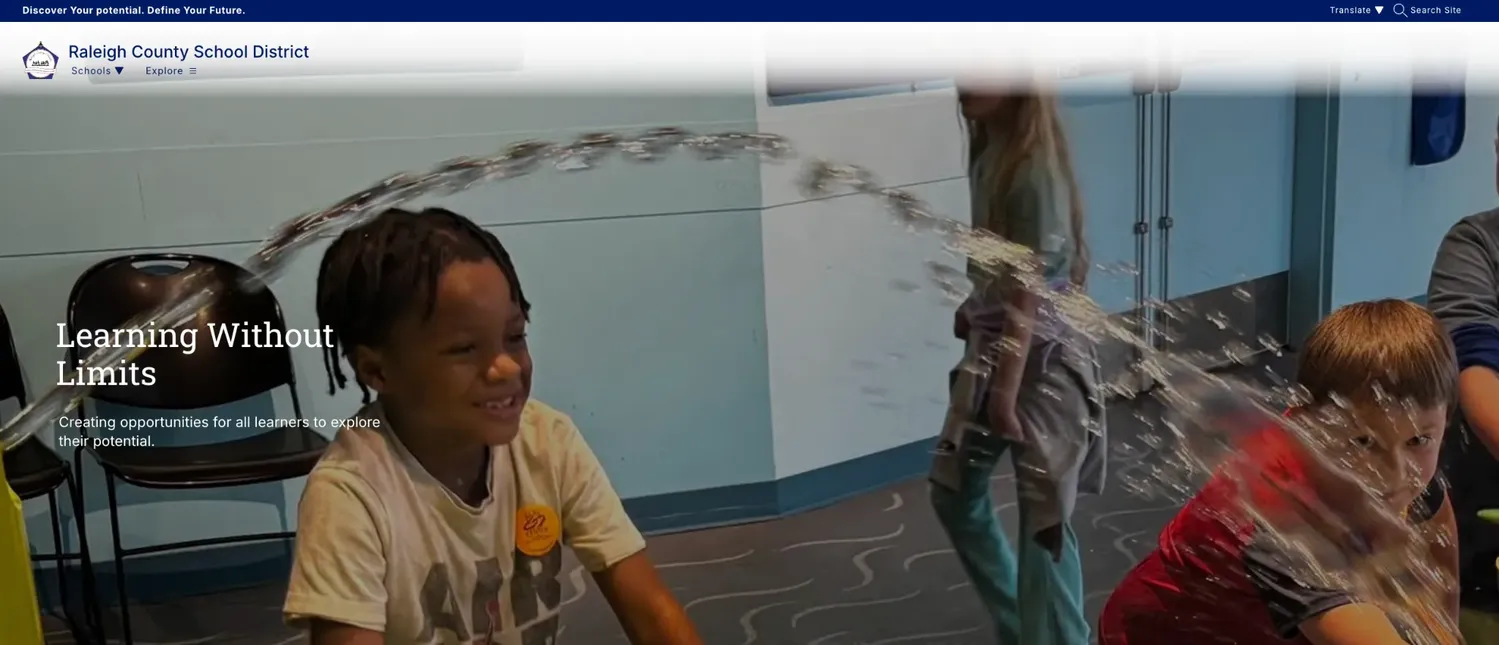
We built the new Raleigh homepage to answer what families actually ask when choosing a school: why Raleigh? What makes it different? What is student life like? While also making it super easy to enroll, and find information fast. An "Enroll Now" button sits near the top of the page, not buried in navigation.

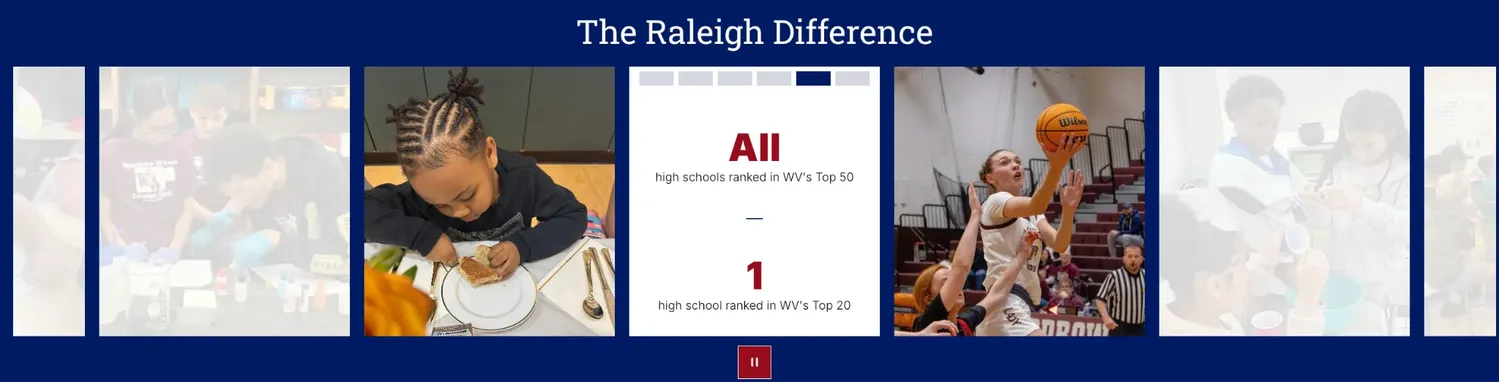
The "Raleigh Difference" section lays out 12 points built to hit every area a parent might be concerned about: academics, safety, technology, basic needs. Two elementary schools rank in West Virginia's Top 20. Four elementary schools and four middle schools rank in the state's Top 50. Every high school student gets a 1:1 MacBook, every elementary and middle school student gets a 1:1 iPad, every student eats breakfast and lunch free, and every secondary school has a school resource officer.
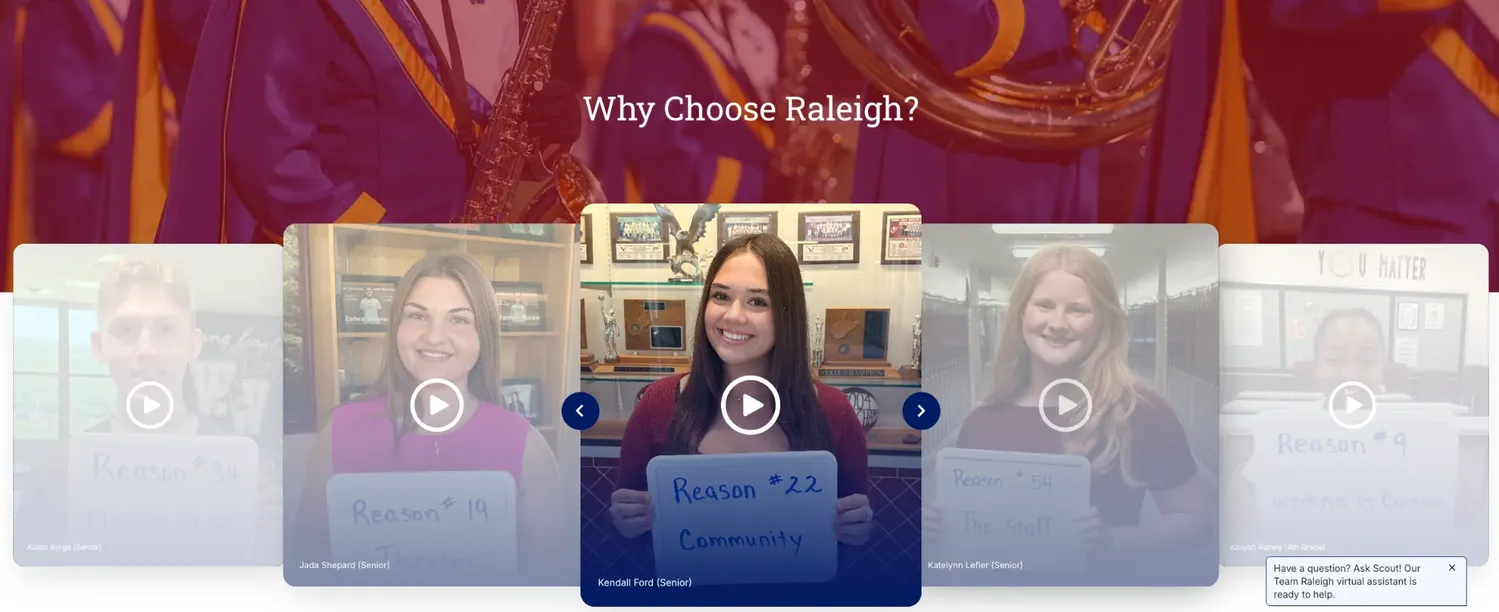
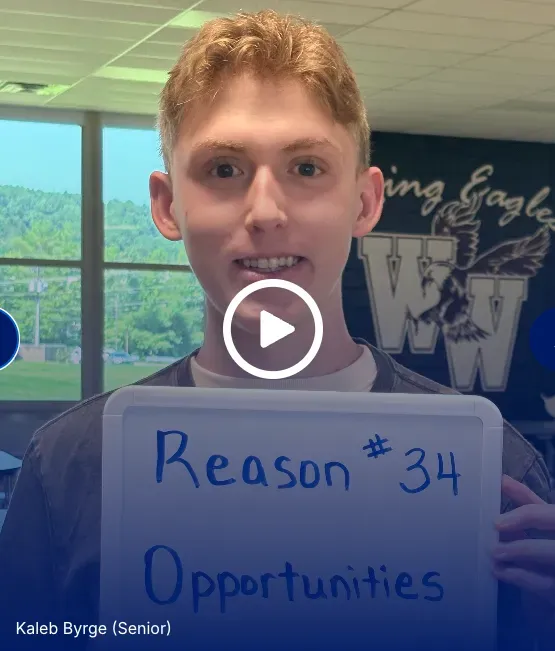
"Why Choose Raleigh" is where students speak for themselves. It's a bank of video testimonials, numbered non-sequentially, "Reason #34 “Opportunities," "Reason #67: Caring Teachers," where students say directly why they chose Raleigh and how it's shaped their lives.
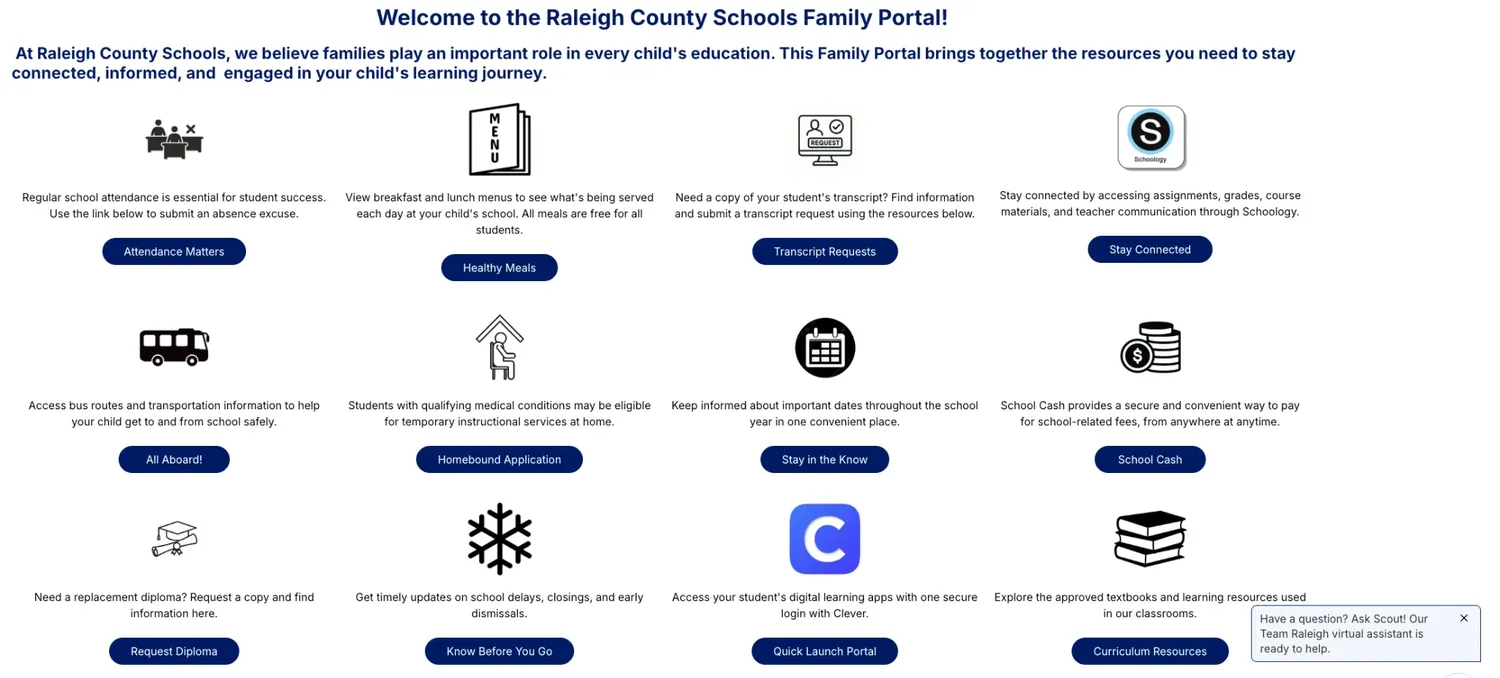
The "Family Portal" button gives returning and prospective families fast access to the 12 categories of information Blankenship identified as what parents look for most, without turning the homepage itself into a directory.
It all starts with 3 buttons on the homepage.
I love this. 3 buttons all with a purpose. The average family only gives you 1.5 clicks. Make those clicks count! A website with intentional design can serve prospective and current families equally well. Everyone wants to see why they made a great educational choice for their children.
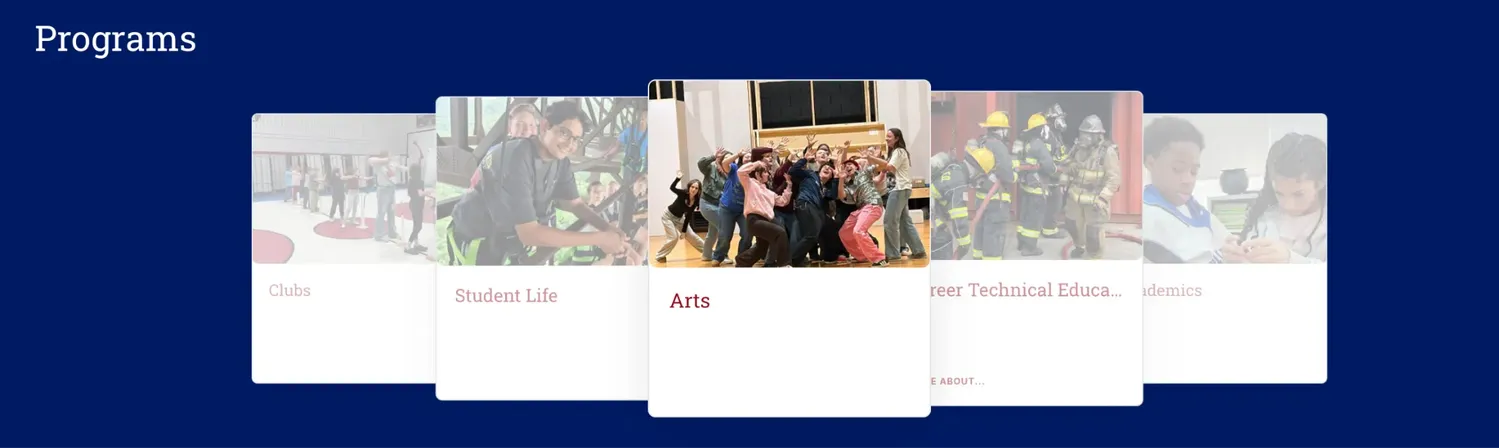
Our goal throughout was to solve the core problem: get parents in, get them the information they need, get them excited about the district, and get them to enroll.
The superintendent saw the shift immediately
Six days after launch, Dr. Starcher told me 26 students had already enrolled through the new "Enroll Now" button, without the district even having publicized it. Twelve of those 26 were students coming back from homeschool or non-public schools, the exact group Raleigh had been trying to win back.
The reaction from Raleigh's principals surprised Michelle Blankenship:
"They were thanking me. And then I had several say, 'How can I get that on my website? I want that on my school web page because it's right there.' I had a principal come and say, 'I need things simple for my family, and this is simple, and I can do that.'"
Five days after launch, I was in Raleigh County to train the district's principals on the enrollment marketing strategies district leaders had learned that summer.
While I was there, I shot and edited the student voice videos myself on my iPhone. It really is this simple to produce. Implementation added them to the site the next day.
I've come to see that content as non-negotiable for a district in Raleigh's position. Students telling their own story, in their own words, is proof a stat sheet can't provide. Every district struggling with enrollment should have that kind of content on its homepage.
A digital front door built to recruit and serve
Brand Pro gave Raleigh premium, marketing-oriented website design without requiring a fully custom build or a large internal web team. Community Experience added a service layer, search and a chatbot, so the homepage didn't have to double as a directory of every department and document.
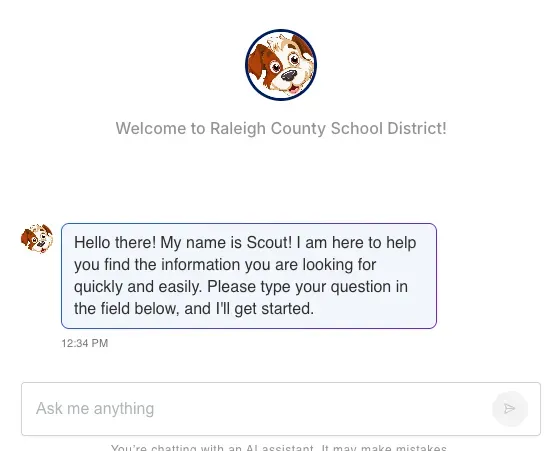
That split solved a real tension: every department has information worth sharing, but not every piece belongs on the homepage.
The site launched the last week of July with online enrollment, the first time Raleigh had offered it digitally. The chatbot followed in the first week of August.
The result: 535 applications in just four weeks
Enrollment segment | Students |
Returning from homeschool | 51 |
Returning from WV Virtual School | 16 |
Returning from private schools | 45 |
From out-of-county or out-of-state public schools | 128 |
New kindergarten enrollment | 88 |
Total new students to the district system | 328 |
In-county school transfers | 207 |
Total online enrollment applications | 535 |
The 328 new students mark a meaningful reversal for a district that had lost roughly 500 students over the prior two years. At an estimated $5,500 per student, that's approximately $1.8 million in potential new revenue.
The remaining 207 applications were in-district transfers. They show families used the new process, but I don't count them as net-new students or net-new revenue. These numbers are through August 27, 2026.
The work continues
Launch was the start, not the finish. I traveled back to West Virginia to train principals on brand and enrollment marketing. Individual school websites are being built out this semester, extending the district-level story down to each building.
Out of this project, I've come away with a playbook other districts can use directly:
Start with the enrollment problem, not the website template.
Make the homepage explain why families should choose the district.
Put enrollment within one click.
Use students as the most credible proof of the experience.
Keep service information easy to find without overwhelming the homepage.
Build content capacity through coaching and practical production support.
Use enrollment data to see where families are interested and where the district needs to respond.
A model for West Virginia, and beyond
Raleigh County had a clear problem, limited summer capacity, and very little time. It still moved from in-person-only enrollment to online enrollment, launched an enrollment-focused homepage, added a chatbot, built student voice content, and produced 535 applications in a month.
I don't think districts need a fully staffed communications department or a perfect campaign to compete for students. They need a clear message, an easy path to enrollment, content that shows the real student experience, and the commitment to launch.
Dr. Starcher is careful not to overclaim what one month proves. Raleigh had lost 500 to 600 students over the two prior years, and she expects this year's decline to be smaller, not reversed:
"Perhaps the work that we've done, the enroll now button, the students we're bringing back, could make it bottom out almost, so we don't continue losing. That would be a victory."
Raleigh took that step ahead of the school year. Four weeks later, 328 new students took a step toward Raleigh.
VIDEO: hear the Raleigh “Step Ahead” story in their own words:
/)
/)