If you want to understand a city in 2026, don’t start at city hall. Start online.
In Rexburg, Idaho, that digital first impression matters. Powered by Apptegy’s website platform and connected mobile experience, the city’s homepage doesn’t feel like a filing cabinet. It feels like a living front door: residents can ask questions, find agendas and minutes, pay utility bills, report concerns, explore community events, and download the city’s mobile app without digging through a maze of disconnected pages.
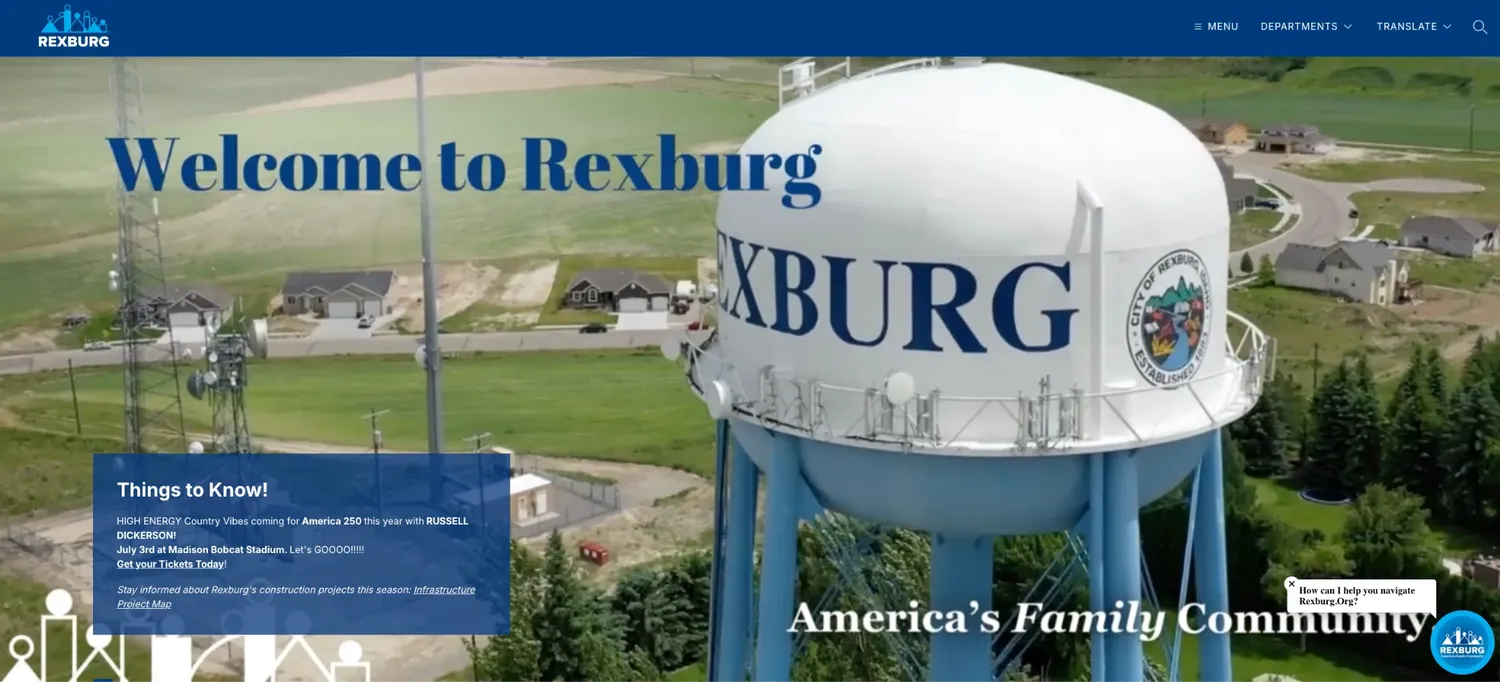
That matters because Rexburg is not a sleepy small town trying to stay quaint online. It is a city of 45,000 residents, making it one of the largest cities in Idaho. It’s also a college town with BYU-Idaho shaping both its size and its rhythm. That means 25,000 college students are part of the population, making Rexburg a distinctly young, mobile-first community.
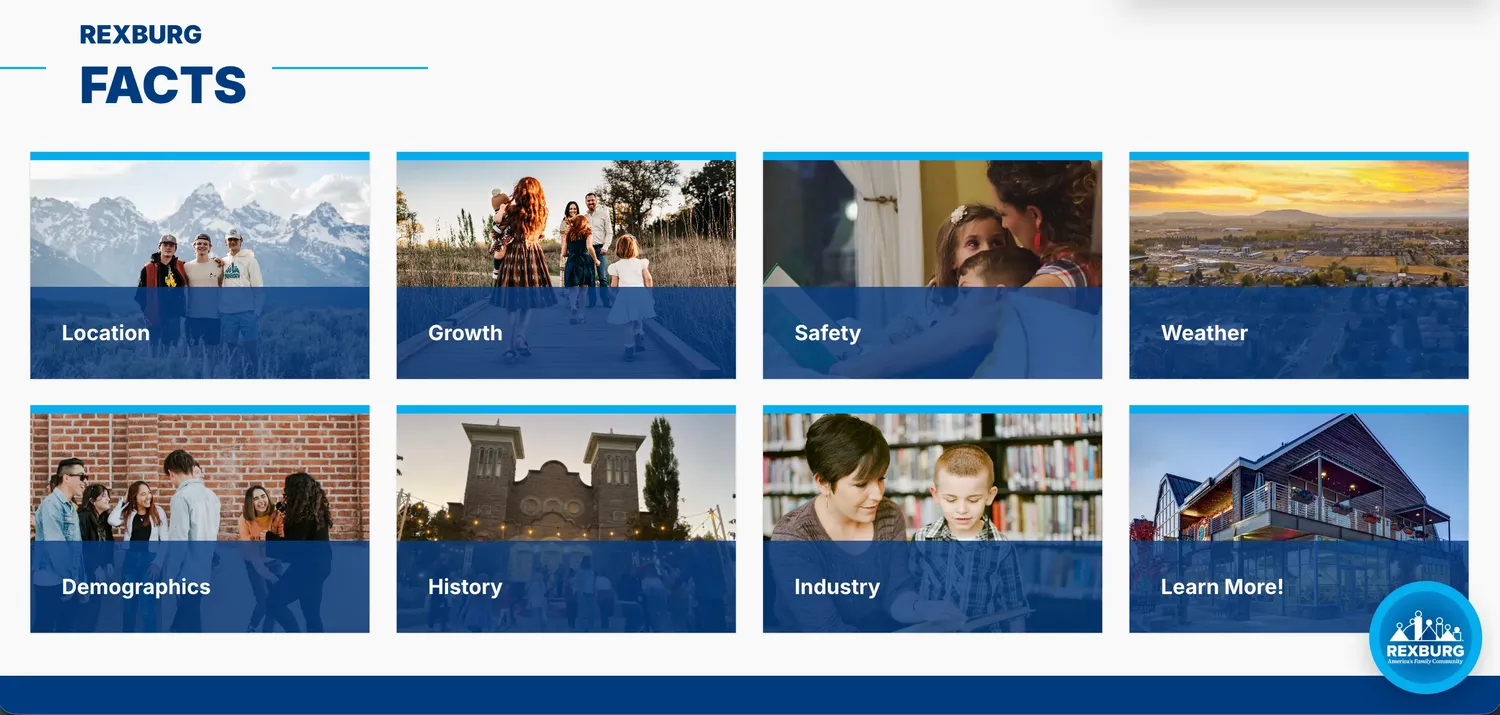
For city leaders elsewhere, that context is important. Rexburg’s story is not just about launching a better website. It is about what happens when a municipality decides its digital presence should reflect the experience of the city itself: organized, welcoming, modern, and easy to navigate.
A City Website Has to Work, Not Just Look Official
Before Apptegy, Rexburg was using a MuniCode platform that had been folded into CivicPlus. As Sarah Kennett-Cromwell described it, the city was stuck deciding whether to move fully into CivicPlus or stay on what had become “a secondhand product” that the original vendor no longer really oversaw. The gaps were significant enough that the city took the question to a full RFP, fielded roughly eight to ten submissions, and ultimately chose Apptegy for one reason above all others: the native app.
That detail was not cosmetic. It was strategic.
“We really recognized that an app was going to be an integral part for our website moving forward,” said Sarah Kennett-Cromwell, Communications Specialist for the City of Rexburg and, in practice, the city’s one-person communications team.
That decision shaped the city’s all in one unified communications strategy. Rexburg uses Apptegy’s website platform, its native mobile app, the Always On AI chatbot, and Engage for newsletters and recurring public notices.
For municipalities trying to reach residents who expect information instantly and on their phones, that combination is increasingly the baseline. Rexburg understood that early.
What changed is easier to see in practical terms:
Before Apptegy: a MuniCode platform folded into CivicPlus, with visible gaps, scattered sub-sites, and uneven digital branding
After Apptegy: one website platform, one native mobile app, one clear city identity, and an easier publishing experience for staff across departments
Before Apptegy: IT still absorbed website friction and internal complaints
After Apptegy: communications and departments can manage far more of the day-to-day work directly, with IT freed up for other projects
A Platform the City Actually Uses
From July 2025 through May 2026, Rexburg used Apptegy heavily across the platform: 138 notifications sent, 5,090 webpage updates, 1,748 page updates, 306 live feed posts, 115 news articles, and 61 newsletters published.
Those numbers matter because they show this is not a decorative platform sitting idle in the background. It is an active operational system used to keep city information current, visible, and moving.
One City Brand, One Digital Experience
Municipal websites tend to sprawl. Departments grow. Facilities add pages. Events multiply. Microsites appear. Over time, what starts as a communications system turns into a patchwork.
Rexburg had already seen that happen.
Kennett-Cromwell said one of the initial concerns with Apptegy was its template-based structure. Like many public sector teams, they worried that a more standardized framework might limit creativity. Instead, it solved a more expensive problem: brand fragmentation.
Previously, sub-organizations were spread across different platforms and different visual identities. Some lived on Wix. Others used Squarespace. In some cases, residents could visit a city-affiliated page without any clear indication it belonged to the city at all. Kennett-Cromwell pointed to the water park as one example: before the shift, there was no obvious indication on that site that it was even a city property.
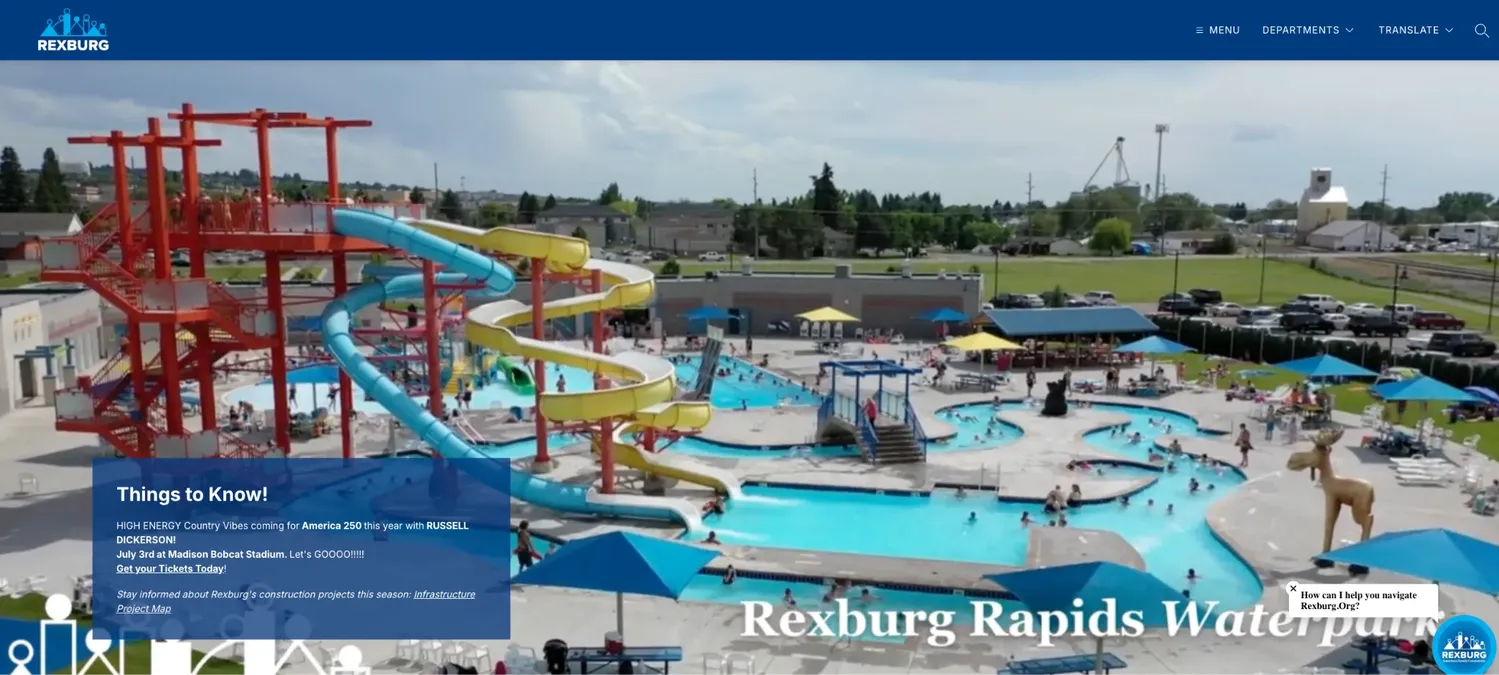
That changed when the city moved to a unified and branded communications system.
“I think even though it was a concern at first, it’s turned out to be a best-case scenario sort of thing,” Kennett-Cromwell said. “It looks like our brand.”
That consistency matters more in local government than many cities realize. A resident does not experience “the website” as a marketing object. They experience it as trust. If one page feels current, another feels abandoned, and a third looks like it belongs to a different organization entirely, the public experiences that as confusion.
Rexburg’s site avoids that trap by making the city feel like one city.
Built for the Way City Staff Actually Work
The hidden challenge in municipal communications is not usually vision. It is capacity.
Rexburg manages content across 17 departments and multiple facilities, while Kennett-Cromwell oversees the website, social media, and day-to-day communications demands that come with public-facing city work.
That is why usability mattered so much.
“I work with a lot of people who use our website that have no website skills,” Kennett-Cromwell said. “The interface has to be extremely simple to learn and understand if I have any hope of our staff applying it in the ways that we need it to.”
She pointed specifically to Apptegy’s drag-and-drop website tools and built-in guardrails, which let nontechnical staff update pages without drifting off-brand or getting lost in unnecessary design decisions.
In the early stages, approval workflows helped departments learn the right way to publish. Over time, as confidence grew, many teams were able to take ownership of their own pages directly.
That progression is what good municipal technology should do. It should not centralize everything forever. It should create enough structure that responsibility can safely spread outward.
Repeatable Workflows for Everyday City Communication
Rexburg’s use of Engage shows what practical adoption looks like in government settings.
Apptegy Engage is now part of how the city sends city council minutes, public hearing notices, public meeting agendas, and a monthly newsletter. For Kennett-Cromwell, one of the biggest advantages is speed: duplicate the previous template, update the links, and publish.

That may sound small. It is not. In municipal communications, repeatable workflows are often the difference between consistent publishing and good intentions. If every routine update requires rebuilding from scratch, the system eventually loses to the workload.
Rexburg has also found the tool easy to train on. While departments have the option to use it more broadly, Kennett-Cromwell noted that planning, zoning, and the clerk’s office are among the heaviest users, and onboarding new staff has been straightforward.
That is the kind of operational win city communication directors and clerks understand immediately: fewer bottlenecks, less retraining, more consistency. More importantly, it means recurring public information gets published on time and is easier for residents to find, which is one of the clearest ways a city builds trust in everyday operations.
Kennett-Cromwell also pointed to something that matters in municipal buying decisions but often gets overlooked in case studies: responsiveness after the sale. She noted that Apptegy has been active about listening to customer feedback and continuing to improve the backend experience. For cities evaluating long-term platform partners, that kind of responsiveness matters almost as much as the launch itself.
How Apptegy Gave I.T. Its Time Back
For Todd Smith, Rexburg’s Chief Information Officer, the impact showed up somewhere even more telling: the absence of noise.
Before Apptegy, the IT department still dealt with ongoing website complaints and support issues even after the city had outsourced its site management. Since the transition, Smith says those calls have “almost ceased completely.”
“I think that speaks a lot to the backend features and capabilities,” Smith said. “With a minimal amount of technical expertise, it just works.”
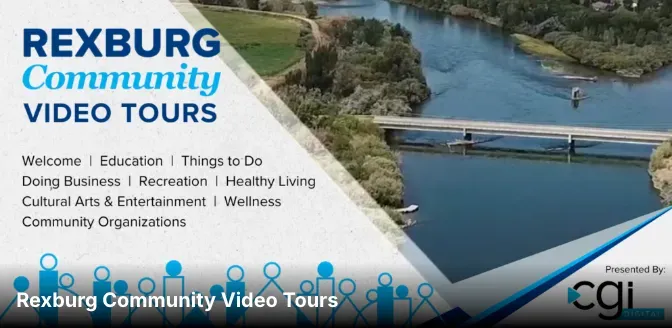
That may be the most important takeaway in the entire story for municipal technology directors.
A city website should not become an IT dependency for every routine content task. If communications needs constant technical rescue, the system is broken no matter how polished it looks on launch day.
Rexburg’s experience suggests a better model: with Apptegy’s platform in place, communications can own the message, departments can own their pages, and IT can stop babysitting the website.
Consistency Without Losing Creativity
Standardization did not eliminate creativity. It simply changed where creativity lived.
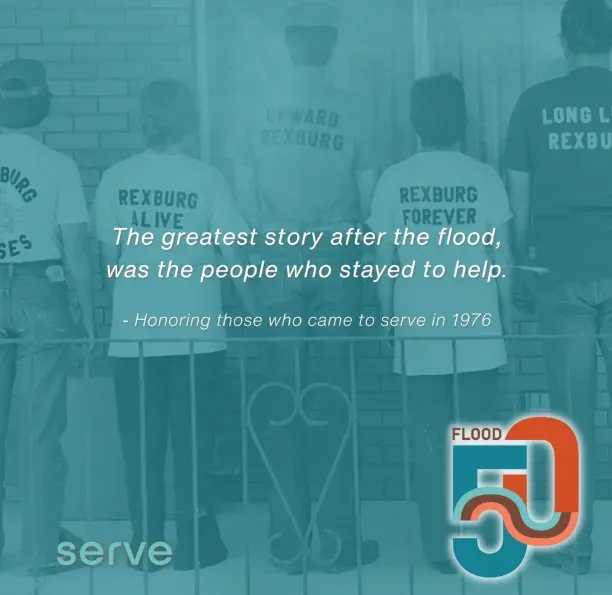
Kennett-Cromwell pointed to Apptegy’s embed feature as an especially useful workaround for departments that need custom experiences inside a more consistent overall framework. One example was the city’s “Flood 50” event page, where the Arts and Culture team used embedded content to create something more specialized without breaking the broader structure of the site.
That balance is worth noting because it answers a common municipal objection.
Cities often assume they must choose between order and originality. Rexburg’s experience suggests the better answer is controlled flexibility: one strong citywide system, with enough room for teams to create standout moments where they matter.
AI Is Only as Good as the Content Beneath It
Rexburg’s story is also useful because it is honest.
Apptegy’s AI chatbot has also become a meaningful part of Rexburg’s digital experience. From April 1, 2025 through April 30, 2026, the chatbot recorded 1,235 engagements and 1,680 total questions, averaging 1.4 questions per engagement. During that period, Rexburg reported a 100% chatbot success rate, with 100% of sessions taking place in English.
The questions residents asked tell their own story about how municipal AI actually gets used. The strongest resident interest areas were General information, Parking Permits and Tickets, City Services, Utilities, and About Municipality. At the question level, the most common themes included parking passes, citations, garbage and recycling, parking, city hours, winter parking, permits, city events, employment opportunities, and facilities.
That matters because it shows residents are not only using the chatbot for novelty or one-off exploration. They are using it to find routine information that can otherwise bog down staff time and frustrate the public when it is buried too deeply in the site.
At the same time, Kennett-Cromwell acknowledged that she has not been able to spend much time in the analytics recently, and both she and Smith described mixed experiences when plain-language questions run into the deeper complexity of municipal site content. What Rexburg’s experience makes clear is that AI performance and content quality are inseparable. Even with strong usage, the broader municipal truth remains clear: AI is only as good as the content environment beneath it.
“Our website is a rabbit hole, as is any municipal website,” Kennett-Cromwell said, describing the challenge of maintaining accurate, clean information across 17 departments while new projects keep arriving.
That may be the clearest signal of where city communications is headed next. First came design modernization. Then mobile access. Now comes content governance: making sure public information is organized clearly enough that both residents and AI tools can find what they need in plain language.
Rexburg is already far closer to that future than most cities.
What Other Cities Can Learn From Rexburg
Rexburg did not choose Apptegy because it wanted a prettier website. It chose Apptegy because a young, growing, mobile-first city needed a communication system that could keep up.
What the city gained was bigger than a redesign:
one recognizable city brand instead of scattered sub-sites
publishing tools staff can actually learn and use
faster workflows for agendas, hearings, and newsletters
less day-to-day friction for IT
a digital presence that gives outsiders a real feel for the city before they ever arrive
That last point may be the most important one.

For mayors and executive leaders, this is bigger than communications software. A unified digital presence reinforces confidence in city operations. It tells residents the city is organized. It tells newcomers the city is current. And it gives leadership a cleaner, more consistent way to show the quality of life, events, services, and civic identity they are working to protect and improve.
In a city like Rexburg, the website is not just a notice board. It is the place where residents decide whether their city feels organized, where newcomers decide whether it feels welcoming, and where local government proves whether it can communicate with the clarity modern communities expect.
Rexburg’s digital front door now does exactly that.
Visit the City of Rexburg's website to see the live result.
To learn more about Apptegy’s approach for cities and towns, visit Apptegy for Municipalities.