Atoka, Tennessee already knew who it was before its website caught up.
The town’s motto says it perfectly: “A great place to call home.” It is a message rooted in civic pride, small-town connection, and the kind of steady growth that makes local leaders think carefully about how their community shows up online.
For Administrative & Communications Coordinator Anna Pond, that question became personal soon after she joined the town. A little over a year into the role, she was handling public relations, social media, calendars, and communications for Atoka’s senior staff after spending a decade in sales roles that sharpened her communication skills and sense of organization. What she did not bring to the job was a web development background.
That mattered, because the town’s previous website platform expected exactly that.
“I didn’t sign up for this,” Pond said. “I can help maintain a website. I did not sign up for writing code.” Before Apptegy, even routine work felt harder than it should have. She spent hours watching old training videos and webinars, trying to teach herself a system that still did not come naturally, from navigating the document center to figuring out how pages were structured and updated. That frustration is a key part of why she was so resistant to switching providers. After investing that much energy just to make the old platform work, the idea of starting over felt exhausting, not exciting.
What Changed Atoka’s Mind
At first, Pond did not want to switch.
She had already invested significant time trying to learn the old system, and the idea of starting over sounded like one more burden on top of an already full plate. The conversation only moved forward after Atoka’s parks and recreation director met an Apptegy representative at a conference and brought the idea back to her.
Pond had one condition: don’t just show me a polished homepage. Show me the back end.
That became the turning point. What won Anna over was not a sales pitch. It was seeing a drag-and-drop editing experience that made immediate sense in contrast to the near-code-level work she had been dealing with before. “Anybody can show you a pretty website,” she said. “I needed to know what it was going to feel like for me on the back end, and once I saw that, everything changed.”
Working through the K-12 question
Pond also had a concern that many municipal buyers share when they first encounter Apptegy: the company is widely associated with K-12 communications.
That hesitation was understandable. Apptegy’s main public homepage still speaks primarily to school districts and school leaders, while also signaling a municipalities offering elsewhere on the site. Pond wanted to see examples that felt relevant to local government, not schools or generic corporate websites.
Once that conversation shifted to real municipal use cases, her focus returned to what mattered most: whether the platform would make daily work easier for the person responsible for keeping the town’s information accurate, organized, and on brand.
A Better Fit for Municipal Communication
Apptegy’s municipalities positioning centers on helping towns and cities manage their website, app, and digital communication in one place, with tools for updates, events, documents, staff information, and mobile-friendly engagement. The company also emphasizes native apps on both iOS and Android and a support model built around ongoing partnership, not just implementation.
That is exactly where Atoka found value.
Pond cited two things above everything else during the evaluation process: ease of use and customer service. Atoka reviewed multiple vendors with a formal checklist, and in her view Apptegy stood apart on both points.
That support mattered during rollout and after go-live. Pond praised her Apptegy account executive, Cailley Reed, for understanding the realities of municipal purchasing and approval timelines, where board meetings and formal process shape every decision. Day to day, she also praised the client experience team and their in-platform chat experience for helping her get answers quickly enough to keep working instead of stalling out.
Rebuilding the site around how the town actually works
After launch, Pond did not simply swap one design for another. She rebuilt nearly the entire site’s content from the ground up, meeting with department leaders individually to review what residents needed to find, what information was out of date, and how each page should function going forward.
In practice, the platform proved simple enough that she ended up handling most of the work herself. That was partly about efficiency and partly about standards. Pond describes herself as the town’s “brand police,” someone who wants the same fonts, logos, structure, and overall feel across every department page.
That control did not come at the expense of collaboration. Staff were still able to take ownership of narrower tasks such as uploading agendas and minutes, while parks and recreation managed its own events content. The result was a cleaner system: centralized enough to stay consistent, but easy enough for the people to contribute without creating confusion.
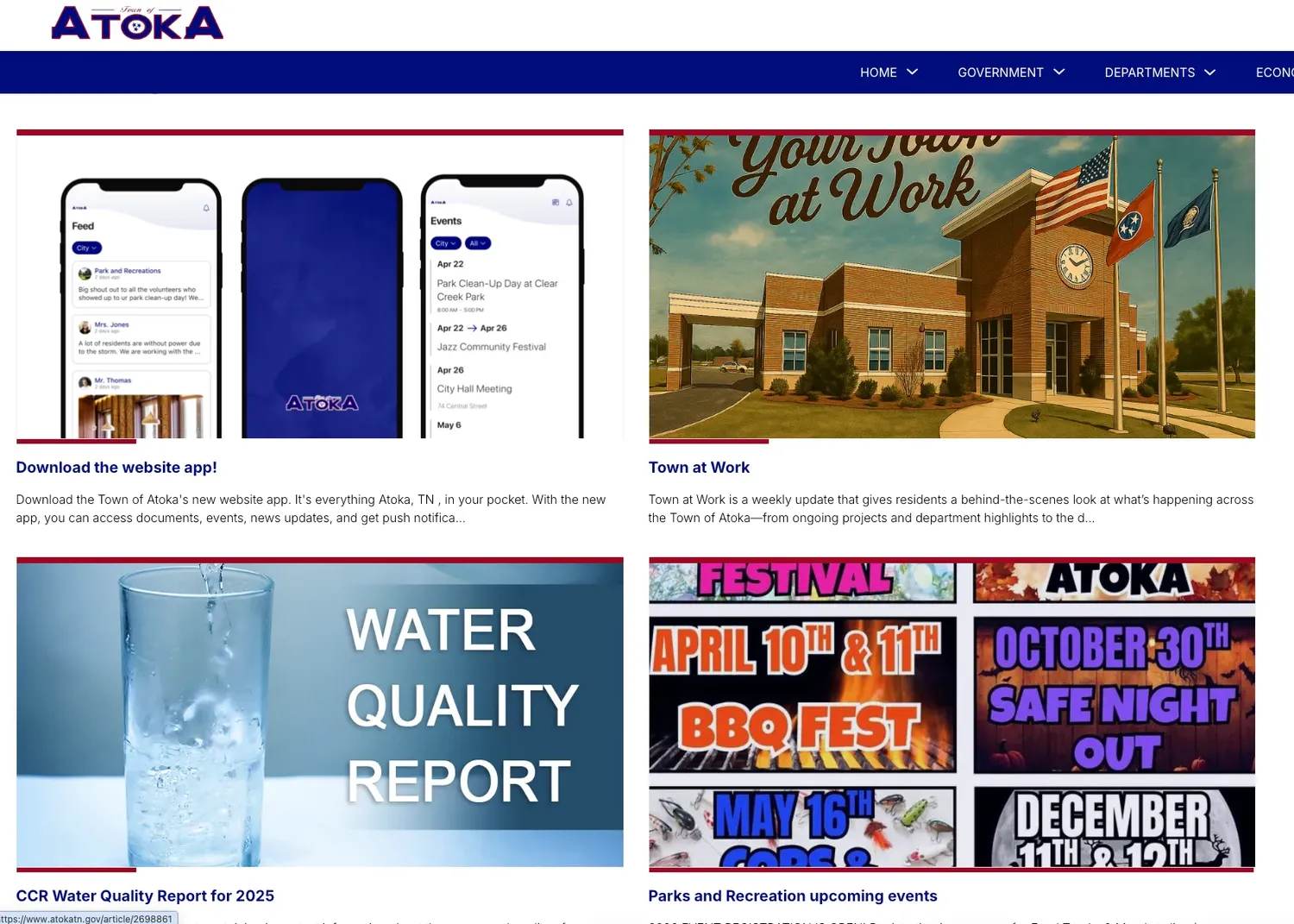
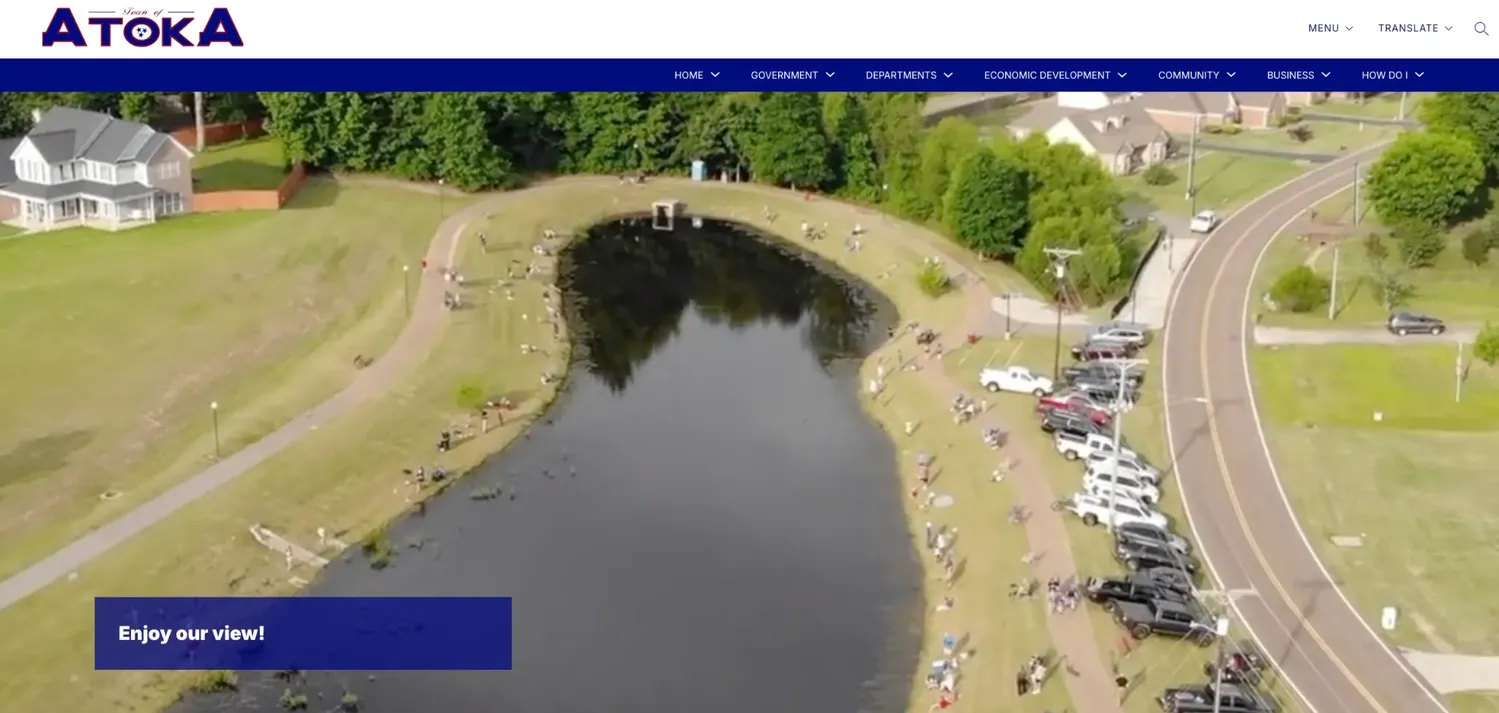
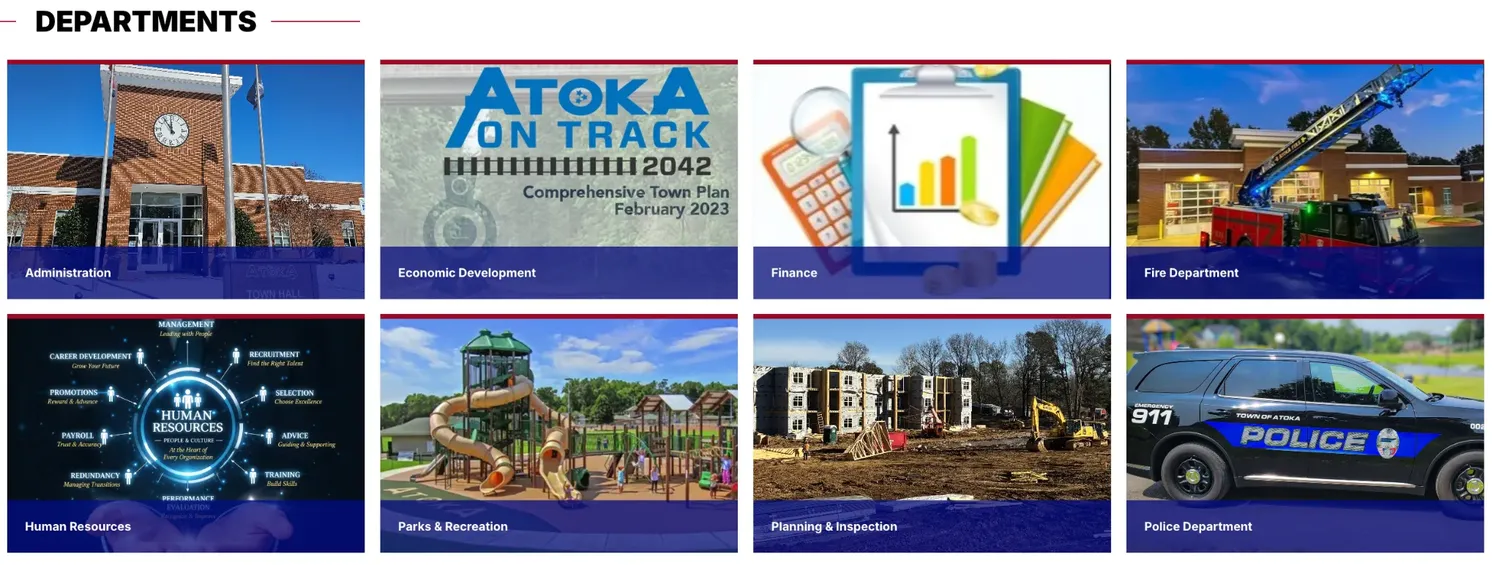
Atoka’s website reflects that approach. The site features a polished homepage, department navigation, a mayoral welcome message, and multimedia elements that help the town present itself as active, welcoming, and organized.
A launch that stuck
Atoka went live in late 2025.
Since launch, the feedback has been strong. Town leaders and residents described the updated site as cleaner, more organized, and more on brand, while the mayor is actively promoting the app to residents.
For Pond, the most meaningful outcome may be simpler than any metric: she is excited to keep building. That says a great deal for someone who began the process as a skeptic and had every reason to resist another complicated system.
The Clearest Sign of Success
Perhaps the strongest proof point is what happened next.
Nearby towns started asking who Atoka uses for its website. Pond had already begun informally referring Apptegy to other municipalities in the region. That kind of word-of-mouth matters in local government, where peers often trust practitioners more than polished vendor language.
Atoka’s story is not about a large communications department or a sweeping digital transformation initiative. It is about what happens when a growing town gives a capable communicator tools that fit the real work: updating information quickly, protecting the town’s brand, supporting multiple departments, and making it easier for residents to find what they need.
For municipalities evaluating their next website and communications platform, that may be the most useful takeaway. The best solution is not the one that looks impressive in a demo. It is the one your team can actually use well every day.
Visit the Town of Atoka website to see the live result.
To learn more about Apptegy’s approach for cities and towns, visit Apptegy for Municipalities.