Hood Canal School District sits on land donated by three Skokomish families in the late 1960s. Before then, students attended small schools scattered throughout communities around the canal. The families’ generosity made it possible to bring those students together in one public school, creating a shared place for learning while also providing the economic efficiencies of operating a single school and district.
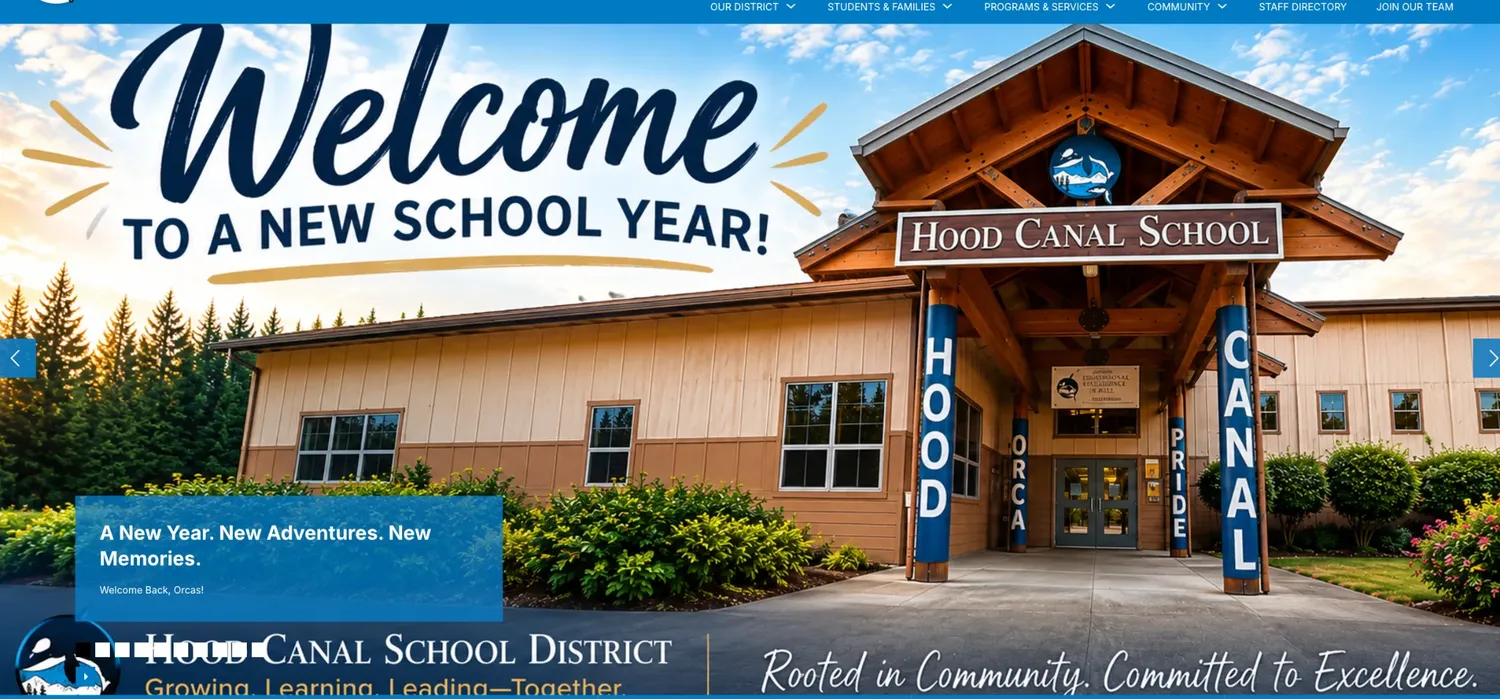
Almost 40% of Hood Canal's students are Native American, many of them Skokomish. That history shapes how the district communicates. At Hood Canal, keeping families informed is inseparable from earning their trust.
A Superintendent With a Phone
Dr. Lance Gibbon is superintendent of a district where a handful of administrators cover what larger systems spread across entire departments. There is no communications staff. For most of his tenure, Gibbon has written the articles, run social media and taken the photos himself.
"Most of the school photography is on this phone," he says, holding it up. From there Gibbon says he can post directly to Facebook, livestream, or add content to the school’s Live Feed and News on the website.
Moving Beyond the Backpack
For years, school information at Hood Canal went home on paper, folded into backpacks, the way schools had always done it. Sending it out was easy. Getting anything back was the hard part.
"Using paper and relying on paper is really problematic for a lot of our families," Gibbon says.
The fix was simple enough for any district to copy. When Hood Canal needs a response from families, whether a sign up for sports, a club, music or summer school, it now sends a short text message with a single link to an online form. The form opens on whatever phone a family carries, adjusts to fit the screen and can be finished in a minute.
"Those have got to be short messages and a short link," Gibbon says. The goal is to remove every step between a parent reading the message and answering it.
Gibbon says the change gradually produced increases in family response compared with paper.
The same thinking reshaped the district website. Information that used to sit in static PDFs has moved onto web pages built with simple expandable sections. That matters for more than convenience. Content that lives on the page translates automatically for families who read in another language, which a PDF attachment does not.
80% of Families on One Platform
That lesson carried into the district's launch of Apptegy's Rooms experience through Group Connect last school year. About 80% of Hood Canal families have signed up.
Before Rooms, communication was scattered. Individual staff used multiple tools and families had to track several apps to follow one child. Consolidating onto a single Apptegy platform gave families one district branded place to look and gave the district one system to support.
Adoption keeps spreading through the building. The morning of his interview, Gibbon had been working with the district's PE teacher and athletic director, who was setting up rooms so coaches could reach every athletic family directly.
For the district's roughly 20 Spanish-speaking families, translation carries the load. Website content translates automatically, and Rooms translates messages in both directions, so a parent can reply in Spanish and staff read it in English.
Rollout support matters for a district without a technology team. Apptegy's Rooms customer success manager held monthly check-ins with Gibbon and school leadership to share adoption data and gather feedback. Gibbon describes the rollout as smooth, with a few bumps the support team helped resolve quickly. “We’re always learning and reteaching,” he noted.
Earning Trust, Then Telling the Story
"Many tribal family experiences in public schools were not positive," Gibbon says. For some, that history includes Hood Canal. He describes the district's work as earning trust, which he distinguishes from rebuilding it.
That work runs on regular contact. Gibbon, school board representatives and the principal meet monthly with tribal leadership, and separately with the Tribe's education department. The partnership reaches into classrooms every day. The Tribe funds three full-time Native tutors who work in the school.
The district also asks its staff to learn from the Tribe directly. For the past three years, Hood Canal staff spent one of their first professional development days of the year with the Skokomish Tribe.
This year, Skokomish Tribal Chairman and CEO Tom Strong welcomed staff and shared information about tribal programs and services. Staff also toured tribal facilities, learned about health and community services, visited the Skokomish hatchery and saw portions of the Tribe's growing housing development.
What the district publishes reflects that relationship. The Tribe hosts quarterly assemblies where Skokomish students sing, dance and share their culture. The district turns those moments into short videos and photo posts. Stories written for the district website sometimes go to The Sounder, the tribal newspaper, which reaches families who may never visit the website.
Gibbon has made the same argument to a national audience. Writing as an official blogger for AASA's 2025 National Conference on Education, he said the message that stuck with him was simple: districts that don't tell their own stories leave the telling to someone else.
"If you don't tell those stories, no one else is," Gibbon says. "They're going to tell some other story, and it's not going to be the story that you want them to tell."
The partnership also shapes the district's construction project. The Skokomish Tribe has been involved from the start, from tying the school into the Tribe's water system to supplying Skokomish timber for the structural columns at the front of the new school. All new signage will be in English and Tuwaduq, the language of the Skokomish people.

Borrowing a Communications Department
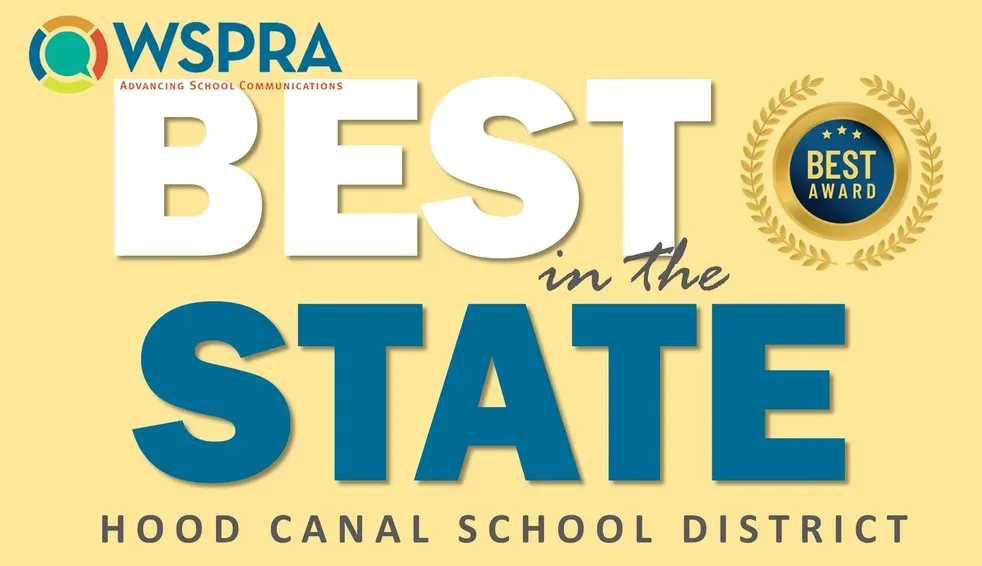
Hood Canal's communications work has earned recognition well beyond its size. At the Washington School Public Relations Association conference in fall 2024, competing among districts with 10,000 or fewer students, the district won best website. Its bond measure video won best in class, and its annual report placed in the state's top five.
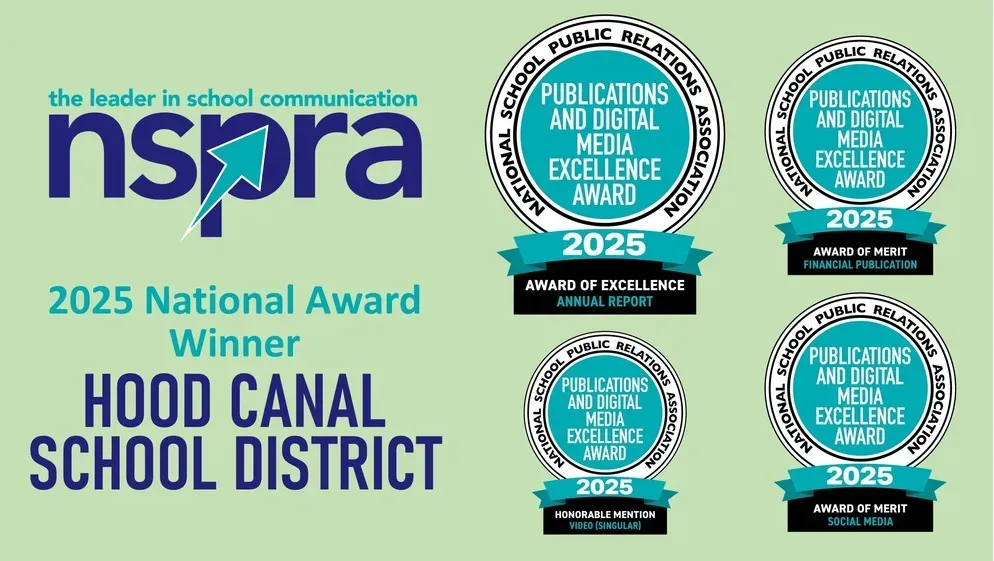
In 2025, the National School Public Relations Association gave the district four awards: an Award of Excellence for its annual report, Awards of Merit for its financial publication and for social media, and an honorable mention for video. The district describes itself as one of the smallest districts to earn that level of national recognition.
Most of that work was not done alone, and that is the lesson worth copying. Gibbon writes the content and gathers the photos. Then he hands design-heavy projects to partners. The annual report and financial publication were produced with Capital Region ESD 113, and the video was made with a local production company. District staff members Susan Vining and Ryan Causgrove built out the website alongside him.
The school board made communication a priority. "Better communication has been one of our board's top goals," board president Edie Reclusado said when the state awards were announced.
Gibbon applies the same approach to local media. He writes press releases that a reporter could run as-is, and the local paper sometimes does.
"You give them a well-written release and you give them some photographs, that works out really well," he says.
Growing the Team Around Him
Gibbon says the hardest part of the job is finding enough time to keep up. His answer has been to spread the work.
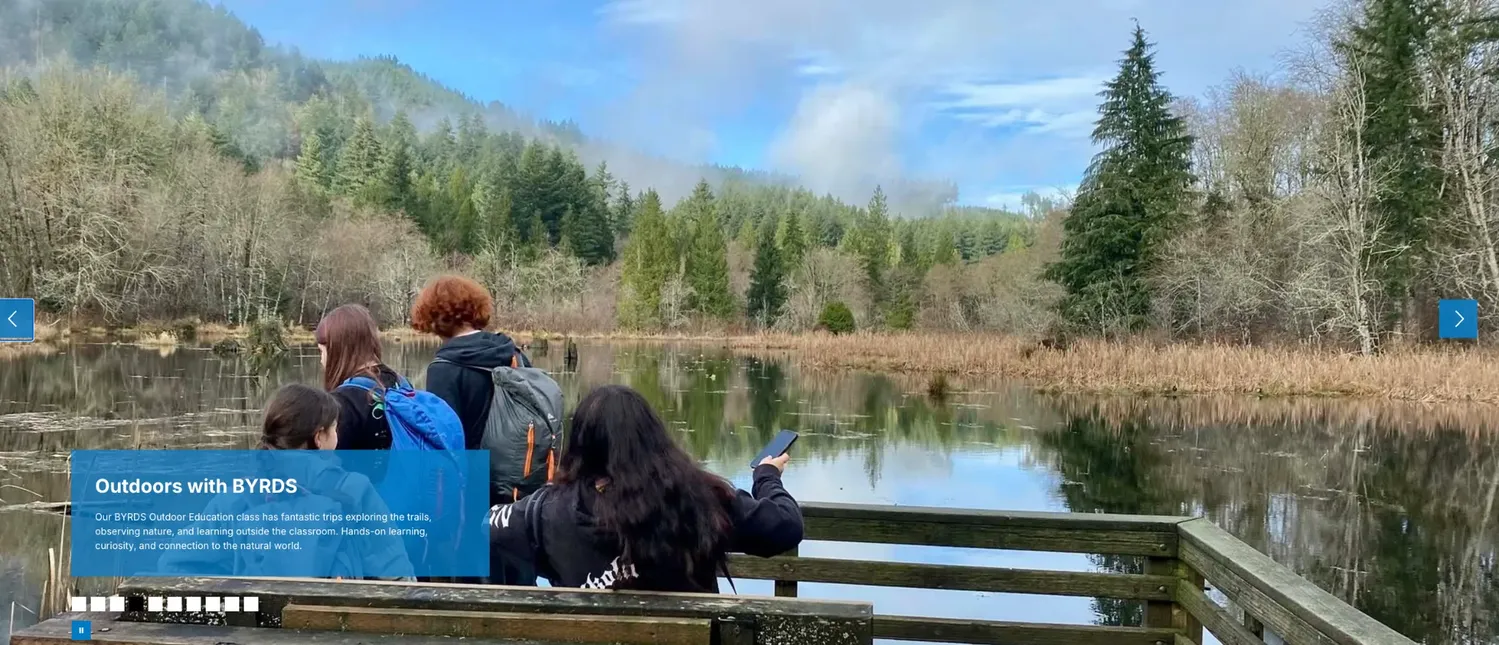
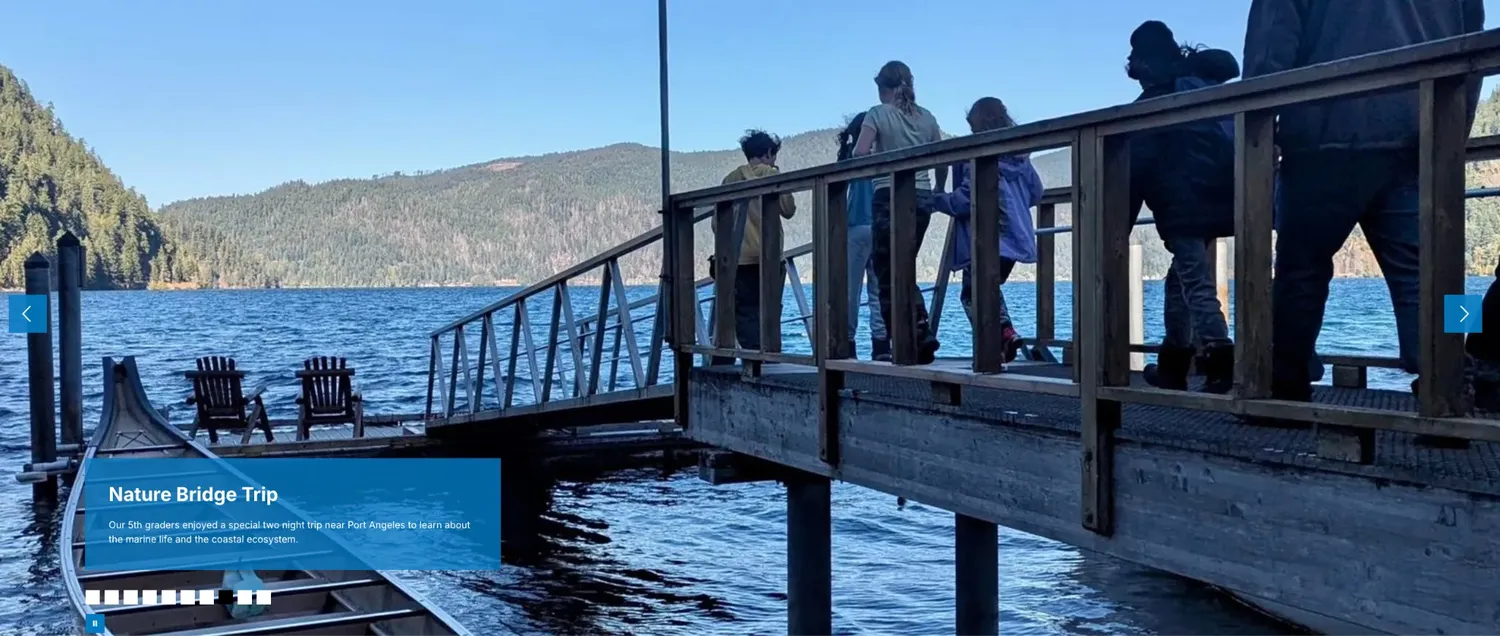
He trained staff to take and send in their own photos. That investment paid off in May 2025, when Tracing the Fjord magazine ran a four-page spread on Hood Canal's outdoor education programs built around images taken by district staff on the trips. The district's executive assistant, six months into the role, is now learning the website and communications work and already handles some of it without him.
"I'm trying to grow more people that can share the load," Gibbon says, "It's not great if it all depends on one person."
It is a theme he returns to often. "In a district our size, out of necessity everyone pitches in," he said in 2025.
He also works to resist his own perfectionism. "It’s easy to spend half an hour editing a photo so it looks like a million bucks," he says, before admitting that the unedited version probably would have been fine.
AI fills some of the gap. "I'm not afraid to use AI to draft content," Gibbon says, particularly for quick posts that need to go out fast.
He has also become a national voice on the subject. When AASA's School Administrator magazine launched AI Applied, a monthly column on practical AI use in school leadership, Gibbon wrote three installments for the series and helped the editor shape the column before launch. In his first column, he describes handing a 2,000-line budget report to ChatGPT and getting back spending patterns that would have taken days to find by hand. The magazine later chose that piece for its Best of 2025–26 issue.
From Three Failed Bonds to Construction
The district's facilities fight shows what sustained communication can do alongside a smarter ballot measure. After three close bond attempts failed, the board went back to the community.
The district returned with a six-year capital levy that would raise about $19 million and require only a simple majority, rather than the 60% required for the failed bond measures. The district also secured significant state matching funds for portions of the project.
The district built the proposal from surveys, focus groups and public forums. Using that information, they rolled out a robust positive communication plan. “Pushing out as much good news in as many ways as possible was key,” Gibbon said.
Voters approved the measure in February 2025. The district moved forward with plans for a new transportation cooperative facility, a building addition and a partial renovation of the K–8 school. Today that construction is underway outside Gibbon's office window.
One Record, When It Counts
Communication tool consolidation paid off in a way Gibbon had not planned for. When the district had to produce records of what it had communicated to families during a state compliance review, he pulled key information directly from the Apptegy platform.
"If people had been texting on their personal phones or using other platforms, that would have been a nightmare for us to find all of that," he says. "I just went to [the Apptegy platform]. It was right there."
The Attendance Connection
The trust work extends to attendance. The board named attendance one of four district goals. Working with ESD 113 and the Skokomish Tribe, the district cut the share of students needing intensive Tier 3 attendance supports from 27% to 10%.
OSPI highlighted Hood Canal in a statewide study of effective attendance practices, work the district credits to Principal Steven Torres and the school's attendance team. In 2026, OSPI named Hood Canal one of 25 Washington districts to receive the State Superintendent's Award for Educational Excellence for Progress, which counts regular attendance among its measures.
Those gains have held, but they have stopped growing. "It hasn't gotten worse, but it hasn't gotten any better," Gibbon says. "We're kind of stuck."
That plateau led the district to Apptegy's Attendance Pro, launched this fall. Gibbon did not make the call alone. He asked the attendance team and front office staff, the people doing the daily work, to review the product first. Their assessment was that it could help the district move past the plateau.
The question behind the decision, as Gibbon puts it, was simple: "Is there something we can do to kind of push that a little further?"
It is too early for results. "We're going to find out," he says.
Why He Stays
Asked why he keeps doing work that gets harder every year, Gibbon calls it a complicated answer. Then he gives one.
"I believe that it's a calling," he says. The chance to make "a direct impact in the lives of kids and families and staff" is, he says, probably one of the biggest reasons. The communications side is the part he enjoys most. A professional musician earlier in his career, he describes it as creative work.
Gibbon's rule is that if the district doesn't tell its story, someone else will. At Hood Canal, 80% of families now hear it from the district first.
/)
/)