/)
In this article, you'll learn how Northern Kentucky Cooperative for Educational Services (NKCES) turned professional development into a personalized gift with SproutBox—a free, curated bimonthly PD box for teachers across its 23 member districts. Modeled loosely on subscription services like Stitch Fix, the free program has helped NKCES win Kentucky's Best Practices Award and shows how any district can use personalization to make educators feel truly seen.
Have you ever received a gift that proved how well someone knew you? Not a generic gift card, but a book about one of your niche interests, a handmade portrait of one of your pets, or antique salt and pepper shakers to add to your collection. A good gift says to the recipient: I listened. I paid attention to what you love, and I picked this out especially for you. And by that measure, a SproutBox—a curated bimonthly gift box created by the Northern Kentucky Cooperative for Educational Services (NKCES)—is a pretty good gift.
The core idea here isn’t entirely new; curated gift boxes have been reshaping consumer culture for years. But unlike a Stitch Fix or a BarkBox, a SproutBox isn’t full of clothes or dog treats—it’s full of professional development resources. And for educators working in one of the 23 districts served by NKCES, it’s completely free.
According to Marketing and Social Media Coordinator Candace Gibson, the idea came from NKCES’ Executive Director Dr. Amy Razor. “She envisioned a sort of ‘Stitch Fix’ for professional learning,” Gibson says. “We wanted something simple and memorable that our districts would instantly recognize as an NKCES product.” Given that the NKCES motto is “Connect, Grow, Serve” and their logo centers around a green sprout, “SproutBox” was born.
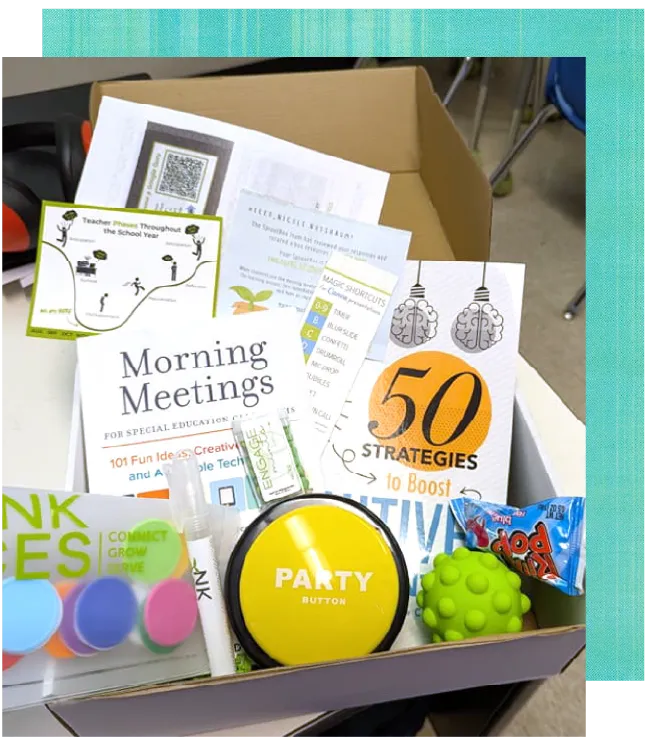
What’s in a SproutBox?
According to their website, “At NKCES, we believe that the best way to lead is by serving others.” But good service is about more than just solving problems and providing resources; it requires going out of your way to make others feel welcome and valued. With SproutBox, NKCES is serving educators in a way that makes them feel seen. “There are only so many teachers who can get out of the classroom to attend one of our trainings,” says Gibson. “So how can we reach more people and meet their needs without it becoming another task on their already full plates?”
For each box, the folks at NKCES select an overarching theme. Then, on an online form, the theme is broken down into subcategories, which participants can rank according to interest. “For example,” Gibson continues, “our very first SproutBox focused on personal wellness.” The interest form allowed teachers to choose between seven different kinds of wellness: physical, mental, social, emotional, environmental, spiritual or recreational. “If they didn’t get their first choice, they’d definitely get their second. And sometimes, depending on our supplies, we might do a combo,” says Gibson. “They love a personalized box of goodies.”
The interest form also allows educators to indicate their position within their district. “That’s where it’s really personalized,” says Emily Giles, assistant director of learning and empowerment. “It will look different if you’re trying to grow as a teacher versus if you’re a principal hoping to grow as an admin.” And in fact, the personalization goes beyond the goodies. “When you open it up, there’s a card with a message addressed directly to you,” Giles says.
Crucially, SproutBoxes are designed to be useful because as anyone in education will tell you, they don’t need yet another mug for their collection. For example, one box themed around the children’s book The Boy, the Mole, the Fox and the Horse included lesson ideas, discussion prompts and reflection cards that all tied back to the text. In this way, SproutBoxes don’t just make teachers feel special; they actually help them with their work in the classroom.
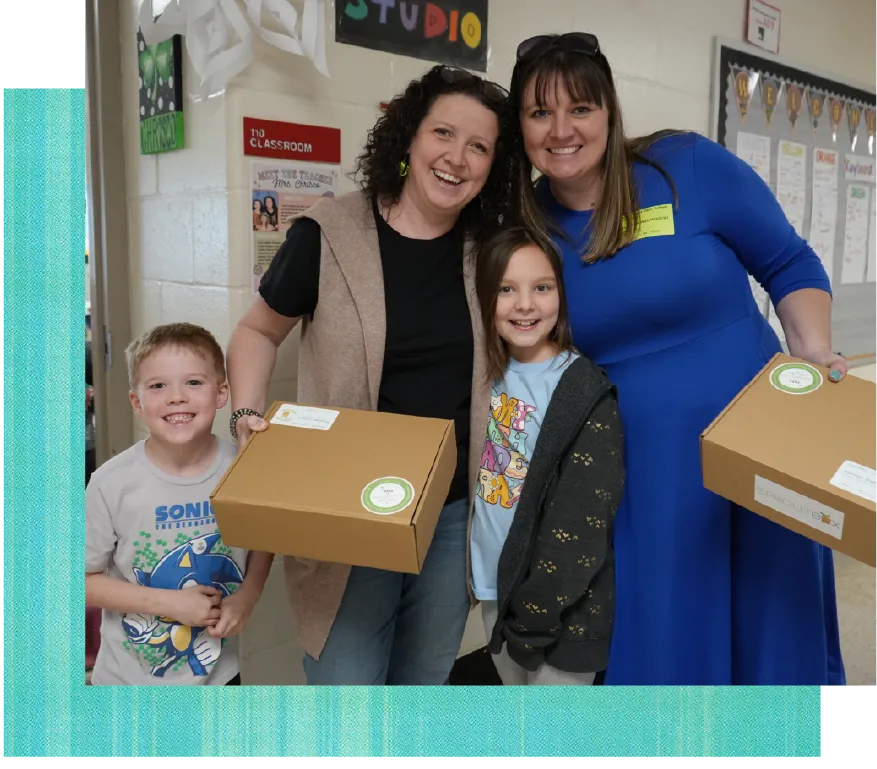
The NKCES team makes 200 SproutBoxes every other month, hand-delivering 175 boxes to participating educators and keeping 25 to give out at their central office. When their most recent interest form went live, all 175 SproutBoxes up for delivery were claimed in less than five minutes.
How to Make a SproutBox
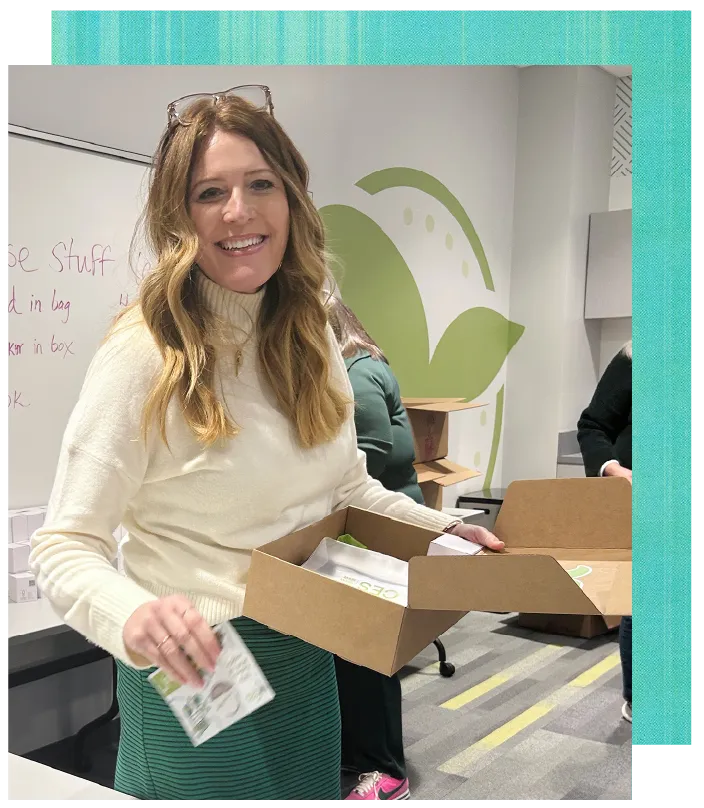
So how does NKCES do all this? “At this point, we’re two years in, and we’ve become a well-oiled machine,” Gibson tells us. NKCES members have to sign up every two months for the next box, but the work begins before the interest form goes live. “We do the ordering early,” she says, “and we work on fun little NKCES-branded items. Then, once we get actual numbers for who wants which box, we do additional ordering.” And while there is a core SproutBox team, it’s not uncommon for other co-op employees to volunteer when it comes time to stuff boxes.
“This year, we also brought kids to the table,” Giles adds. “We’re attached to the regional alternative school, so we’re lucky enough to have kids right upstairs.” The team included students throughout the entire process. “We set up an application and interview process for interested students, making sure that we took note of each of their skills,” says Gibson. “Some of them may not have had the patience to be part of the box-building day, but were really good at artwork, for example.” The team managed to involve students in everything from designing reflection cards to organizing the boxes. “It’s a win-win,” Giles says. “It provides them with a learning opportunity, and it helps us put together 200 boxes.”
And speaking of win-wins, SproutBox provides an opportunity for NKCES, as well—to strengthen their brand. While it was an immediate success, not many people were talking about the project online. “Now, we include this sticker inside the box with our social media handles on it and ask educators to share their SproutBox stories,” Gibson tells us. “This gets people commenting on our posts or tagging us in photos of themselves using our resources. It’s been really great to see.”
The Future of SproutBox
You’re probably wondering how NKCES funds this project. Originally, the project ran on grant funding—and as of now, educators across all 23 member districts receive their SproutBoxes for free. Soon, though, that funding will run out. “But we’re always brainstorming,” says Razor. “A part of our vision is ‘creating a world yet to be.’ So we’ve discussed possibly expanding our SproutBox audience beyond Northern Kentucky to create a revenue stream. That would allow us to do more with our member boxes.”
“And the data is there,” says Giles. “When we look at who accesses our online modules, we have people from West Virginia and Ohio engaging with our content. Sometimes, we even have people outside Northern Kentucky fill out our SproutBox interest form. Of course, then we have to tell them they aren’t eligible to receive a box.” The point, it seems, is that there is demand. It’s plausible to imagine a future in which NKCES curates paid SproutBoxes for educators outside their region.
“I’m even thinking about what it would look like if we had a trusted partner,” adds Chief Academic Officer Dr. Robb Smith. “Let’s say we find a local hospital or mental health provider to partner with. Maybe they can contribute to the box or pay for sponsorship. That would create sustainability for the future.” What’s obvious, though, is that the NKCES team is invested in keeping SproutBox around for the long haul—and with good reason, considering the project’s success.
Thanks to SproutBox, NKCES became the first co-op to receive a Kentucky Department of Education Best Practices Award. “When you win that award, you have to give a presentation at the Kentucky Continuous Improvement Summit,” Gibson tells us. “So we had to figure out how to make this a model that could be replicated elsewhere.” According to Giles, the team’s presentation explained that the boxes themselves aren’t what made this project special. “It’s more about finding innovative ways to deliver personalized professional learning,” she says. “Anybody can do it. It doesn’t have to be books and stickers. Maybe you can mail out personalized QR codes to different online resources. It just depends on how you work with your audience and what they need.”
The Impact of SproutBox
“It’s been so interesting to watch these little communities form around SproutBox within each district,” Gibson says. “Some people have SproutBox group texts to remind each other when the interest form goes live. We get to hear them chatting about what they got. We really enjoy the process so much, watching that sense of community form.”
In fact, NKCES has decided to use SproutBox as an intentional means for cultivating community. “I think for most of us, our favorite was the belonging box,” Gibson tells us. The idea behind the box was simple, but genius: The first 100 educators who filled out the interest form picked a friend to receive a SproutBox as well. “Plus, we gave them a little place in the form to write a note. Then, we turned the little notes into cards that went inside the boxes,” Gibson explains. That month, 100 teachers received the SproutBoxes they expected, but 100 more got one as a surprise—along with the knowledge that someone else had thought of them.
No one wants to spend their career feeling unseen or unsupported, but as we know, many teachers do. However, there may yet be something you can do about it. “You may not be equipped to build boxes,” Gibson says, “but there are other ways to provide the kind of personalization that will impact a teacher’s day and make them feel seen.” After all, feeling seen is the antidote to anonymity. And the less anonymous your educators feel, the more they’ll feel like they belong.