/)
In this Q&A, Dr. Donald Robertson, longtime superintendent of Virginia Beach City Public Schools, explains how growing up in a tourist town shaped his approach to hospitality—and how he's built it into district systems from campus safety to family communication over his 38-year career.
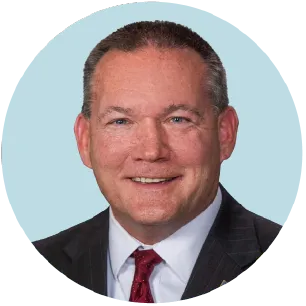
For Dr. Donald Robertson, hospitality is more than a buzzword—it’s a through line of his career. A native of Virginia Beach, Virginia, he has spent most of his life in one of the country’s most famous tourist destinations, so it’s no surprise that a customer-first attitude has rubbed off on him. In the 38 years since he joined Virginia Beach City Public Schools (VBCPS), Robertson has served in a variety of roles, from teacher to coach to principal to superintendent. Yet no matter the position, hospitality has always remained central to his work.
This is especially true now that he is at the helm of VBCPS, charged with managing and supporting approximately 10,000 employees and 64,000 students. While the district is nationally known for its high achievement and diversity of programming, Robertson has focused his tenure on ensuring it functions as a part of a thriving local ecosystem of community organizations. SchoolCEO sat down with Robertson to discuss how he thinks about hospitality—and how he applies it at his division and beyond.
What did growing up in a tourist town teach you about hospitality?
During college, I worked at the oceanfront for one of the most successful developers in the history of Virginia Beach—watching how he operated, his meticulous attention to detail, his willingness to pick up trash, to sweep the floor, to take a moment and genuinely talk with a customer.
That really resonated with me. Even as a millionaire, he wasn't too big for any particular job. He understood that all of his actions mattered. When people in his position are picking up trash and greeting guests in a hotel, they're saying without words: “This is what ownership looks like.” That's really what we're trying to create in Virginia Beach—employees who own the work they do.
People often think of hospitality as an interpersonal skill, but how do you operationalize it across an entire district?
You have to be very purposeful. You have to have a vision of what you believe hospitality actually means, and then you have to build systems around it.
Structurally, we start with safety. My security team is composed of five former military service members or Virginia Beach police officers, plus an assistant director from the FBI. We're very deliberate about emergency management because we believe when a kid feels safe, they're going to come to school. That's fundamental.
From there, we work on the welcome. The person at the front desk has to have the right attitude and demeanor. They won't always be greeting happy parents, so they have to be able to handle stress and communicate: "It's going to be okay." The training we give staff is simple: Your first job is to listen. Your second job is to help.
In your view, what does hospitality look like for students—not in theory, but in the actual programs and opportunities you create?
When I think about hospitality, I think about it from both sides. An environment that makes you feel welcomed is one that interests and engages you. So when you’re trying to provide that kind of environment, you want to ensure you're creating programming that meets the needs of various learners.
Students thrive when they feel like someone cares about them, so first we try to create the conditions for care. We want learning environments where kids feel welcome, seen, heard and valued. When that happens, it puts them at ease—and in a position to learn.
Over the last three years, we've pushed to get students at the secondary level involved in extracurricular activities. We know that when kids are engaged in school programs outside of class, their grades are better and their behavior improves. We're now up to 68% of secondary students involved in at least one extracurricular during the school year. What we've seen as a result—particularly at the high school level—is that academic achievement has gone up, more aggressive behaviors have gone down, and attendance has improved. The research is playing out in real time.
As kids get older, they're really interested in specific pathways. We have nine academy programs across our 12 high schools and three at the middle school level—fine arts, athletics, extracurriculars and more—so kids can see themselves in something beyond graduation.
How does hospitality help you engage families?
Parent and guardian involvement is and always will be critically important. There's a natural gradual release; parents and guardians are highly involved at the elementary level, a little less at middle school, and a little less at high school. So we don't have to work very hard to keep elementary families engaged. Our real focus is secondary. At the school level, principals create smooth transitions—fifth graders moving into sixth grade, eighth graders moving into ninth—with personal invitations to families.
When we have families coming to a big event like a band concert or an athletic game, we ask ourselves: What's the message we want them to leave with? Sometimes it's as simple as a 30-second public service announcement, or a direct line: "If you ever have concerns, reach out. We're here."
I also record a monthly Deskside Chat video, which goes out alongside our family newsletter. I end every single one of them the same way: "If you're having any questions or concerns about your child, contact your teacher, your school counselor, your principal, or the central office—because when we work together, we can accomplish anything." We keep saying it because families need to hear that they are welcome here.
How does regional collaboration serve your hospitality vision?
From a regional perspective, I use the concept of an ecosystem to help us think beyond VBCPS. The notion of an ecosystem is that when we all bring something to the table, we can all benefit. There's not a competition between divisions; there's a competition for excellence that all of us can enjoy.
We're part of what’s known as the Tidewater region: Virginia Beach, Chesapeake, Norfolk, Portsmouth and Suffolk, five divisions all bordering one side of the Chesapeake Bay. I've been making inroads to create opportunities where those five divisions combine resources whenever possible, so programs are available to kids regardless of which division they attend.
What’s come out of this is something we call the Virginia Beach Community Roundtable—a collaboration between superintendents, business leaders and other partners working to make our area a better place not just for students, but for the community as a whole. We work to align school programming with the needs of the community.
The most important thing is creating partnerships that are genuinely mutual. Right now, many people have needs, and unfortunately, sometimes people ask for things without offering anything in return. What we want is a two-way street—you're providing support to us, and as a result, we're getting support back to you.
Amazon, for example, has provided financial support and field trip opportunities. In return, we're providing students who go through their programs and become future employees. We also have a partnership with BayPort Credit Union, which has contributed to the collaborative financially over the past three years. In return, we market the programs they've supported under their name, and on a more personal level, we make sure they receive thank-you notes from our students.
The roundtable has grown to workforce leaders, philanthropic organizations and more. How do you keep everyone genuinely invested in the work?
The first thing was starting with transparency and freedom. I told the group from the beginning that they could leave at any time—and if they had friends who wanted to join, they could bring them. No pressure, no obligation. That alone changes the dynamic.
The second thing was making sure people could see that their time mattered. We focused on deliverables people could point to—quick wins, so to speak. Once we had real results, engagement grew naturally. People stay when they feel ownership. When you give someone a task they can accomplish, celebrate that result and build on it, they want more. Engagement is earned, not assumed.
Then I moved the meetings to them. We've met at the Port of Virginia, the Virginia Ship Repair Association, TowneBank, Amazon and local universities. When you go to someone else's space—their facility, their campus, their headquarters—and you learn about what they do, they feel respected. And respect creates loyalty.
What advice would you give school leaders who want to move from a siloed mindset to a more connected, community-centered model? Where does hospitality come into play?
You cannot do it alone. It's impossible. And you have to be willing to get outside your own school division, open yourself up to being part of something bigger by not being too competitive to share. Collaboration isn't a weakness; it's a path to innovation.
I've served under both a Democrat-led board and a Republican-led board, and I've received exemplary evaluations from both—because I recognize that they have a job to do. They're doing the very best they can under enormous pressure, and my job is to work to the middle, to find the win-win.
That's hospitality in a structural sense. It's showing up without a political agenda, listening to different perspectives and keeping the focus on what we're actually here for: the kids. If you keep asking what's best for students, it cuts through a lot of the noise.