In this article, you’ll learn why districts can’t rely on parents alone—and how to build support with community members who don’t have kids in school. Using examples from Francis Howell School District's Citizens In Our Schools program and Nixa Public Schools’ One Nixa community classes, it shows practical ways to create connection, counter misconceptions and turn residents into informed advocates.
For decades, public schools have relied on a built-in source of support: parents and families. But what if fewer people in your community are having children? According to the Center for Disease Control and Prevention (CDC), birth rates have declined in recent years, and fertility rates in the U.S. hit a historic low in 2023. That same year, Pew Research Center found that 47% of childless U.S. adults under 50 say they are unlikely to ever have kids.
And due in part to these lower birth rates (as well as increased life expectancies), the overall population is getting older. The U.S. Census Bureau projects that by 2030, adults over the age of 65 will outnumber those under 18 for the first time in U.S. history.
These demographic shifts have significant impacts on schools, the most obvious being the enrollment declines seen in districts across the country. But there’s also a sneaky secondary effect. When fewer people in your community have school-aged children—whether because their kids are grown or because they haven’t had kids at all—fewer people have firsthand experience of what your schools are really like. Without that experience, they may be basing their opinions about your district (and their decisions about whether to support it) on outdated misconceptions. That’s why school district communications and community outreach can’t stop with families.
Folks who already have kids in your schools have an obvious reason to support you—but when that natural link doesn’t exist, you have to create one. Two districts in Missouri have found innovative ways to do just that.
Citizens In Our Schools
Like many districts across the country, Missouri’s Francis Howell School District (FHSD) has been plagued by negative narratives in recent years. According to Chief Communications Officer Jennifer Jolls, controversy emerged in 2020 with debates around masking and virtual learning—and never really died down. “We also had some other challenges after that—some leadership transitions, a new construction project that went significantly over budget,” Jolls explains. And in addition to these local issues, national firestorms like the controversy over Critical Race Theory made their way into the FHSD community.
“We were seeing so much misinformation on social media,” says Jolls. But with just a few communications team members in a district of 17,000 students, “we just didn't feel like we had the resources to educate everyone on our own,” she says. “So we started asking ourselves: How do we engage these people who aren't already in our schools, who don't get our newsletters all the time, who maybe don't have a source to get information?”
The answer began to reveal itself in 2023, when Jolls participated in Vision Leadership St. Charles County, a nine-month program designed to educate citizens about county government. “The model was really interesting to me—bringing people together for an immersive day of learning once a month,” she tells SchoolCEO. “It clicked for me: Maybe we can engage people in a similar program around education.” And so FHSD’s “Citizens In Our Schools” program was born.
Over the course of nine sessions throughout the school year, Citizens In Our Schools participants get a firsthand look at every aspect of FHSD’s district operations, from curriculum to budgeting to safety and more. They see students in action in the district’s college and career programs. They even serve lunch alongside food service workers and clean with custodians. “Just like with our students, we know hands-on learning is important,” says Jolls. “We’ve all been in those ‘death by PowerPoint’ situations. No one likes that. So instead of seeing slides about how bus drivers help keep kids safe, they actually ride a bus themselves.”
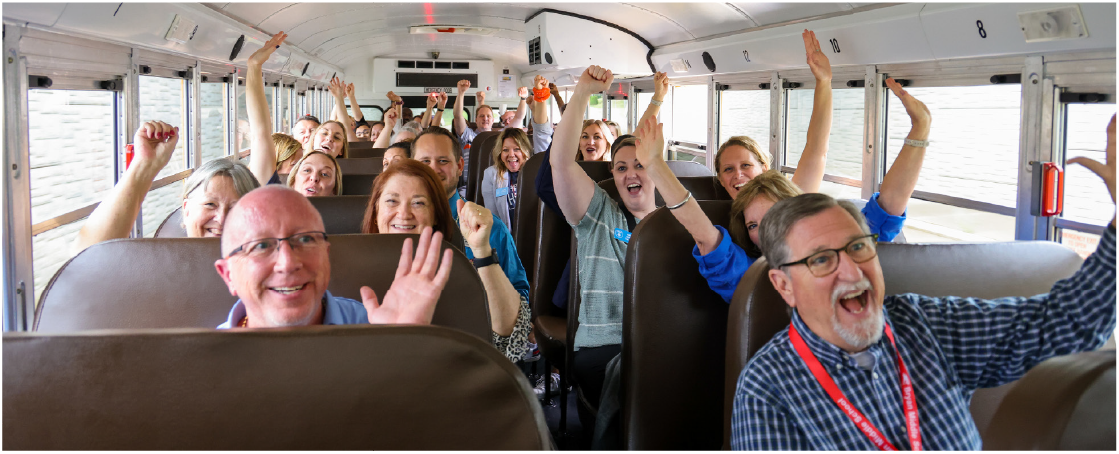 Just as important as the “what” of Citizens In Our Schools is the “who.” “The goal was always to bring people in,” says Jolls. “We knew we’d have some PTO parents and others who were connected, but we purposely wanted to make sure we had a cohort of people who weren't as connected—so we reached out specifically and recruited those people.”
Jolls and her team especially target influential community stakeholders; they’ve had elected officials, fire chiefs and pastors participate. “In our first cohort, we had a chamber president,” she says. “He doesn't actually have kids in our school, but we knew that people in the community look to him for information and advice.” In other words, he was a valuable person to bring into the district’s orbit.
The district’s vocal critics are also welcome—even encouraged—to join. “We had a community member who was very vocal: standing up at board meetings, talking about CRT, talking about all the things the district was doing wrong,” Jolls says. The team invited that leader to join their first Citizens In Our Schools cohort. “Sometimes people don't trust what they don't understand,” says Jolls. “So we’re not afraid to swing the doors open wide and say, ‘Here's what we do. Here's what we're teaching. Here are all the nuanced decisions that we make every day.’ Not everything is a black-and-white decision, but you can't really get into that nuance until you see it in action.”
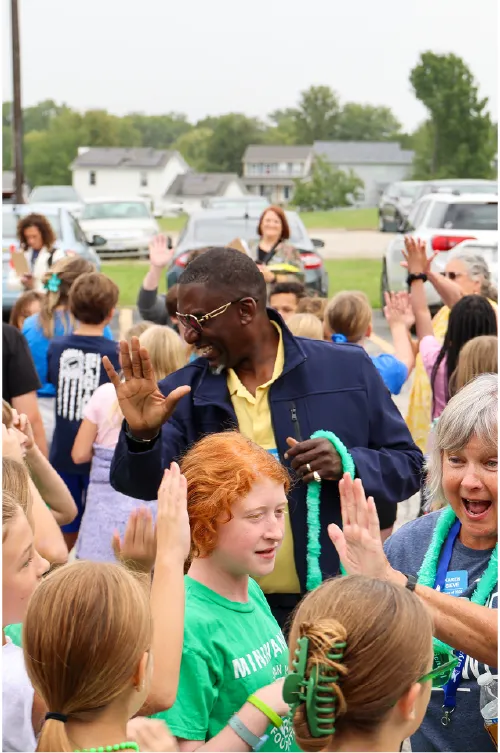
Through Citizens In Our Schools, that nuance comes to life for participants. For example, “people know a big chunk of their tax dollars go to the district, but they don't really understand how that money is used,” Jolls explains. So rather than simply giving a presentation on the district’s finances, the FHSD team puts participants in the decision-making seat through a mock budgeting process. “We give them fake money, and they figure out how they would allocate it,” says Jolls. “When the HVAC unit over here goes out, what do you do about that? Or when your healthcare costs go up 20%, how do you make sure you can still retain staff and give reasonable raises?” Having had that experience, participants come away with a greater understanding of—and appreciation for—the day-to-day work of school leaders. “We hear a lot, ‘I never knew how complicated your roles were,’” says Jolls.
So Citizens In Our Schools gives participants—with and without children—a direct connection to the district. But that’s not where the benefit stops. While each year’s cohort is only about 30 people, “those 30 people all have their own spheres of influence,” says Jolls. In a way, each alumnus of the program becomes a thread tying their networks back to FHSD. “It has become an extension of our communication team: people reaching people in their own circles,” she says. “A lot of districts have key communicator groups. This is like that on steroids.”
Take a snow day closure, for example. It’s not unusual for the average community member to look out their windows at clear roads and grumble about schools being closed. But Citizens In Our Schools alums have ridden through all 150 square miles of FHSD on a school bus. They know that the roads in more remote areas may not be clear. They know how much time and thought goes into the decision to close school, and exactly what factors determine that decision. So when people complain on social media, those program alumni—newly minted advocates—speak up and set the record straight.
And it’s not just snow days. Armed with the information they learned from Citizens In Our Schools, these new champions can accurately correct misinformation, defend leadership decisions and help rebuild public trust in Francis Howell Public Schools. “We don’t ask them to do that; they just do it,” says Jolls. “We’ve built this engaged group of Citizens alumni now who are empowered and equipped with information to support the district without being asked”—even when they don’t have kids in school.
One Nixa Community Classes
As previously mentioned, populations across the U.S. are getting older, and Nixa, Missouri, is no exception. “Our demographics are shifting,” says Dr. Ashley Copley, Nixa Public Schools’ director of student services. “Our community is aging, and our seniors are a larger part of our population than they have ever been before.” Many of those older adults haven’t set foot in a school building in decades—a fact Superintendent Dr. Gearl Loden wanted to change.
Loden had noticed that while local junior colleges and libraries hosted classes for the community, he’d never heard of a public school district doing the same. So he charged Copley and Professional Learning Specialist Brooke Gantt to figure out how Nixa could pull it off. “And we were like, ‘Challenge accepted,’” says Copley.
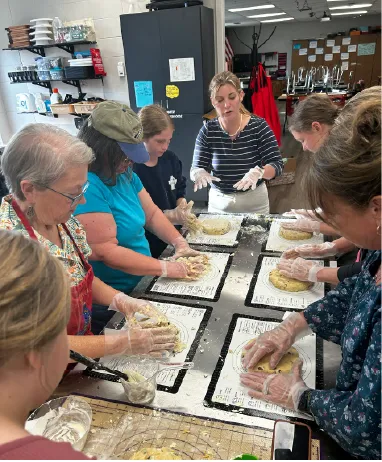
In its first semester in fall 2023, One Nixa—as the community engagement initiative came to be called—offered just six classes, but the bones of what would make the program so successful were already there. “It was very organic,” says Gantt. “We were phoning our friends, saying, ‘Hey, we know you are really good at this—would you be interested in teaching a class?’” One of the district’s assistant principals taught a class on navigating the National Parks; Gantt herself taught a class on etiquette. Classes were open to absolutely anyone, whether or not they had a connection to Nixa Public Schools. Instructors didn’t need to be connected to the district, either.
The program grew quickly. “We started developing just by word of mouth—people saying, ‘Hey, I want to learn this. Do you know of anybody that would teach a class on this?’” Gantt tells us. Potential instructors came out of the woodwork as well, volunteering to teach everything from hand-knitting to soap-making to line dancing. “We are discovering more hidden talents in our own community as we raise awareness of the program,” Loden adds. “We are thrilled to showcase the diverse talents within our community and foster connections through these enriching learning opportunities.”
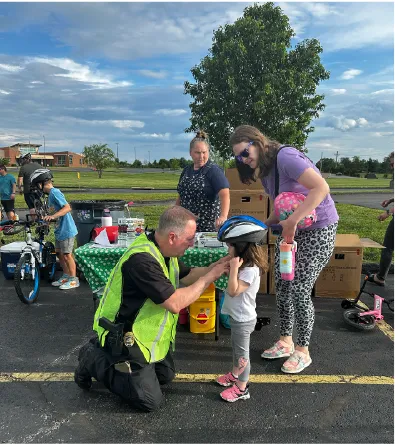
Since the fall of 2023, One Nixa has grown exponentially. The district has hosted more than 130 classes, drawing in close to 1,900 total community members. “It has been an exciting two years watching One Nixa evolve from its creation to its current form,” says Loden. “The response from the community continues to be inspiring."
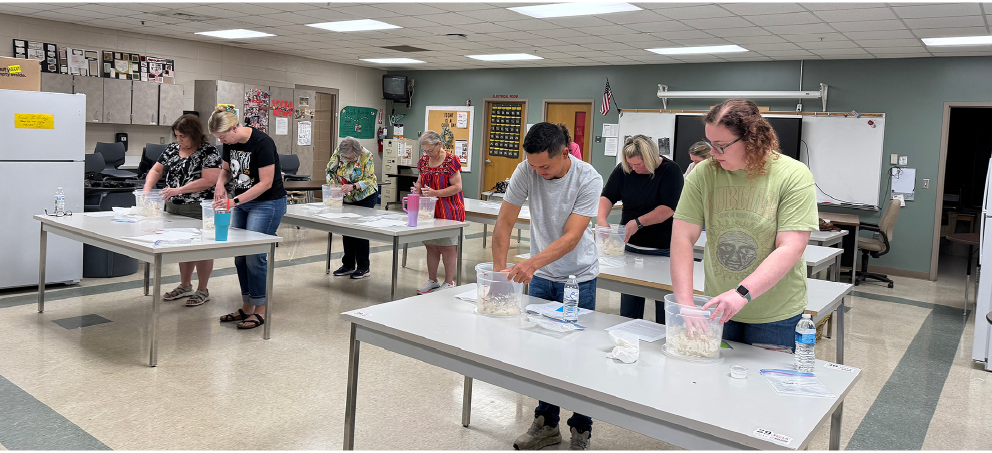
The best part? All these classes give Nixa a chance to show off their facilities—many of which were built with taxpayer money. For example, a One Nixa class on smoothie-making met in the high school’s recently remodeled Family and Consumer Sciences Lab.
“These three older women came to that class, and as they’re looking around the kitchen, one of them says, ‘Now, this was remodeled with tax dollars, wasn’t it?’” Copley tells us. “They had no ties to the district other than living in our community. Their kids are grown. They don't have grandkids here. But they heard about our class, showed up, saw where their bond dollars went and commented on how nice it looked. That’s what this is all about.”
 In particular, One Nixa has made great use of the district’s brand-new, 105,000-square-foot Apex Activity Center. “We built this big, beautiful multi-purpose facility—but a lot of our community was calling it ‘the indoor football field,’” says Copley. “So, through One Nixa, we wanted to open up this facility to our community.” During the winter months, Nixa opened the center every weekday from 6 to 7 a.m. for “Apex Active Hour,” inviting residents to come walk the indoor field. On Mondays, they served coffee and breakfast and invited local leaders like the mayor or chamber president to give community updates.
The district even factored One Nixa classes into the very architecture of the Apex. Realizing that older residents would prefer not to drive at night, “we put a community room in that facility for daytime classes,” says Copley. The overarching message is clear: The Apex isn’t just for football. It’s for the entire community.
Perhaps the greatest benefit of One Nixa’s community activities is the number of volunteers they’ve gotten through the program. “People are asking us, ‘What else can we do in the schools?’” says Copley. One participant has started signing up to read to kindergartners; another has volunteered to help with health screenings. “It’s connections that we're making in these classes or walking laps around the Apex, but they’re also connecting to the schools beyond that,” she says.
Whether you create a citizens academy, spearhead a series of classes or try a different community engagement approach altogether, one thing is clear: Every member of your community should have an opportunity to connect meaningfully with your district, regardless of whether they have kids in school. Invite people without current students to engage. Give them something worthwhile—whether it’s information, connection, purpose or simply an experience. You might just create some of your strongest advocates in the process.

