In Garretson, South Dakota, there's nowhere to hide. It's the kind of place where “everybody knows everybody,” so you would think internal communication would be simple.
Garretson School District learned the opposite. This is a district of 450 students, all in one building, 25 miles northeast of Sioux Falls, close to the Minnesota border. With an upper midwest community identity, school life is deeply personal.
Staff communication had become fragmented across email distribution groups, text threads, informal conversations, and disconnected tools. Important updates were buried in inboxes. Leaders couldn’t tell who actually saw critical information. Staff were overwhelmed trying to track communication across multiple channels.
“We were dealing with email distribution groups, text message threads, and Snapchat groups,” said Technology Coordinator Matt Schrank. “It was hard trying to keep track of all that.”
That challenge is what led Garretson to adopt Apptegy’s Staff Connect beta in April 2026, not because they needed “just an intranet,” but because they needed a modern internal communication system.
The Problem Wasn’t the Amount of Information. It was Fragmentation
Like many districts, Garretson already had communication happening everywhere, but the communication wasn’t centralized, measurable, or easy to manage.
Schrank described their old system in a way any school leader would recognize: "It's sad when you think you're part of all the internal conversations, but external people know more about it than you do."
Even in a single-building district, communication was scattered across email distribution lists, text threads, and informal conversations. Information existed, the problem was knowing where it lived, whether anyone had seen it, and who was working from the same source of truth.
The district didn’t need another static document repository.
They needed:
One trusted district-owned place for professional communication
Visibility into whether messages were actually seen
Fewer disconnected tools
Easier communication between staff, administrators, and families
A system that worked on mobile and matched how educators actually communicate
Staff surveys also confirmed the problem. About 75% of staff said the district needed to improve internal communication. In Schrank's words,
"You could communicate almost everything to staff that is even borderline confidential and you're probably still not saying enough. The problem was that messages disappeared into the wrong channels."
"The one-stop shop was our motto," Schrank said. "That's what we wanted."
Not more places to communicate. One professional place for school communication to live—a true staff communication hub.
Why "Just an Intranet" Misses the Point
One of the biggest takeaways from Garretson’s experience is that districts think the problem would be solved with “just an intranet.”
Schrank explained that static pages alone wouldn’t have been enough.
“The tie together of Rooms and Staff Connect and being able to do both of those is probably why I’m intrigued by this even more.”
For Garretson, the value came from combining:
Staff announcements
Department and campus groups
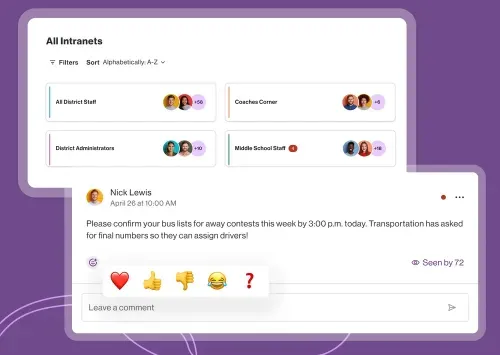
Read receipts
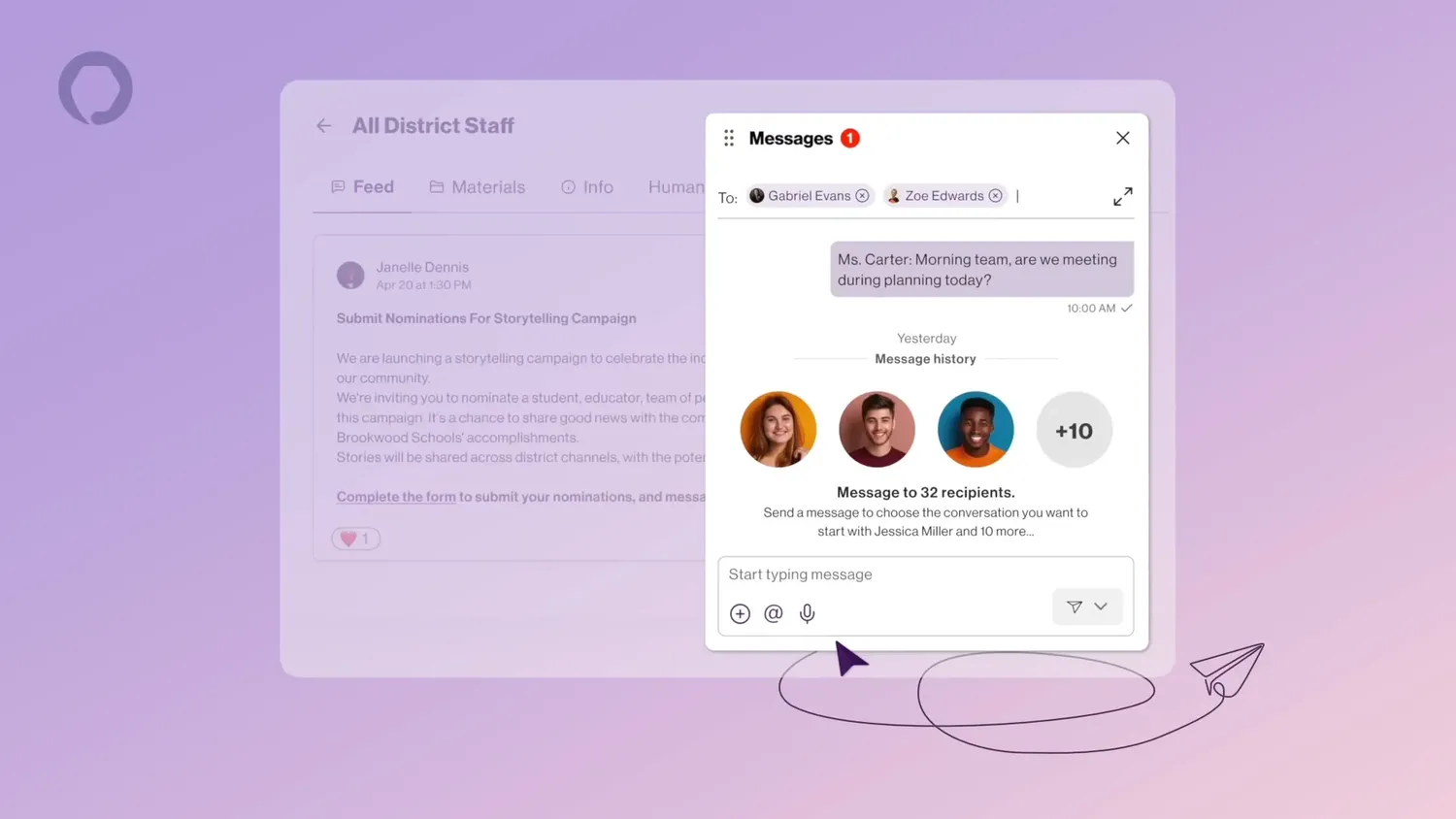
Staff-to-staff messaging
Mobile communication
Parent communication through Rooms
Shared resources and documentation
All in one ecosystem.
That unified experience mattered because the district already understood the power of centralized family communication through Apptegy's two-way communication solution.
“If your internal and external communication are in the same spot,” Schrank explained, “we’re going to see [adoption of] both of those go up.”
The data proved him right.
Results Within Weeks
Garretson onboarded to the Staff Connect beta and within just three weeks, usage across the district accelerated dramatically.
Staff Communication Growth
+261 net new staff sending a first new message = more collaboration
+108% average increase in staff and guardian messaging = more engagement
+151% increase in announcements = more updates and connections
Its power is beyond just internal communication. It has truly fueled all communications.
Platform Adoption
Garretson's experience confirmed what strong communicators already know: presence builds trust, and trust drives participation. The right tool didn't change that truth. It amplified it.
Garretson’s usage data showed:
90% staff activation rate
97% monthly staff engagement rate
91% guardian activation rate
87% monthly guardian engagement rate
The district also saw substantial increases in:
Staff messaging volume
Cross-campus announcements
Parent engagement
Guardian responses inside Rooms
Perhaps most importantly, the district saw adoption increase late in the school year, a time when most schools struggle to introduce any new initiative.
“That’s not lost on me either,” Schrank said. “We asked our staff late March, early April to try something new… and we had a lot of people actually using it.”
The Difference Between Sending and Knowing
One of the biggest changes Garretson experienced was visibility.
With email, leaders could send information. But they had no way to know whether staff actually read it.
Staff Connect changed that dynamic.
Schrank remembered the reaction immediately: When our principal saw, “You mean I get to see who saw my message?”Okay, great. Now I get to have this face-to-face conversation knowing you received the information." He also valued the record the platform created. "I really like having, 'I know I talked to you about something.' What was it?"
That visibility fundamentally changed accountability and follow-up. The district could move past "I sent it" and into "I know it landed." That changes how leaders follow up, how principals manage expectations, and how staff understand the weight of what they're receiving.
Why Mobile Matters More Than It Sounds
In schools, communication rarely happens at a desk. It happens in hallways, on buses, during events, between classes. In those moments, people default to whatever is fastest. Too often, that's personal texting.
Schrank wants to change that habit.
"If you want your mobile device with you, that Apptegy app is the one that's popping up and you're communicating through that," he said. "You don't have to use your text message." He was blunt about why: "You don't have to worry about talking about a kid through text message and get your phone subpoenaed."
A district-managed communication record creates continuity, reduces risk, and gives staff a system to return to instead of fragmented personal threads. In a school environment where communication happens under pressure, mobile usability isn't an extra. It's what determines whether a platform becomes a habit.
One Building, Same Challenge as Everyone Else
What makes Garretson's story compelling is how universal it sounds.
Schrank spent time in advisory conversations with peers from much larger districts and came away struck by how little the core challenge changes. Whether a district serves 450 students or 100,000, the same frustrations surface: scattered tools, inconsistent staff habits, leaders who want better visibility, and the constant tension between overcommunication and missed communication.
Internal communication wasn't a small problem just because the district was small.
It was a real systems problem. And like any system-wide problem, it required a systems-level fix.
A Superintendent Willing to Bet Early
Schrank spoke with respect and admiration for outgoing superintendent Guy Johnson, who spotted the opportunity early.
"I think he takes precalculated risks," Schrank said, "and he saw this from the get-go and got me really super excited about it."
Early adoption only works when leadership is willing to move before every detail is polished. Garretson didn't wait for perfection. Before Johnson's departure, the district planned to purchase Staff Connect, giving incoming superintendent Dr. David Olson a platform the district is already learning to use, not one starting from scratch.
What Success Looks Like From Here
Garretson is still early in this journey.
"We're just scratching the surface on what we're going to be able to do as a district," Schrank said.
High school adoption will need more intentionality in August. Summer use cases, including communication around student athletes, will expand how the platform gets used. But the core shift has already happened. Garretson no longer sees internal communication as something that can be left to email, habit, or hope.
When Schrank talks about what other districts should do, he doesn't make it complicated: Communication improves when everyone knows where to go, what to trust, and how to stay connected in the same place.
/)
/)