On winter mornings in Buffalo, school communication becomes urgent quickly.
Families check phones for closure alerts before sunrise. Parents refresh school websites while standing at bus stops in lake-effect snow. Across the city, thousands of families rely on school updates to figure out whether buses are running, buildings are open, or schedules have changed.
For Buffalo Public Schools, those moments revealed something important.
Communication could no longer feel fragmented.
In a district where more than 83 languages are spoken and more than 7,000 multilingual learners are enrolled, access to information is not a convenience. It is a big part of how families build trust in their schools.
For Alicia Thompson, that work feels personal.
Long before she became Buffalo Public Schools’ Director of Instructional Technology, Thompson was a Buffalo student herself. She grew up in the district she now helps lead.
In Buffalo, loyalty to community institutions runs deep. The same pride that fills the Bills Stadium on Sundays also shows up in neighborhood schools, where generations of families remain deeply connected to the district.
“These are our families,” she says. “This is my community.”
Today, Buffalo Public Schools serves more than 32,000 students across nearly 60 schools, making it one of the largest districts in New York State.
Four years ago, the district partnered with Apptegy to rebuild its website system and create a more unified way of communicating with families across Buffalo.
At the time, district leaders were looking for much more than a cleaner website design. They needed a platform that could help schools stay connected while making information easier for families to find and trust.
Before the redesign, schools often managed their websites differently, creating inconsistent experiences for families trying to navigate the district online. Important updates could be difficult to locate quickly, especially from mobile devices.
Then the urgency around that work grew even larger.
A significant cybersecurity breach exposed major weaknesses in the district’s infrastructure and accelerated Buffalo’s push to modernize systems across the district.
When Thompson and Chief Technology Officer Julianna Sciolino stepped into leadership around the same time, they inherited both the pressure and the opportunity to rethink how families experienced the district online.
The website quickly became one of the most visible parts of that effort.
“This website is only one part and one component of it,” Thompson explains, “but we wanted to make some big changes in the area of technology.”
Using Apptegy’s platform, Buffalo Public Schools Webmaster team including Michael Strangio and Michael Linneball began rebuilding the district’s digital front door. The goal was not simply to make the site look better. Leaders wanted families to find information faster, especially on mobile devices. They wanted school websites to feel connected instead of scattered. And they wanted communication to feel reliable no matter which school a family visited online.
The impact showed up quickly.
Between March 2025 and March 2026, Buffalo Public Schools saw a 28% increase in new website users. For Thompson and her website team, the growth signaled something larger than web traffic. More families were discovering the district, engaging with schools, and turning to the website as a trusted source of information.
Families increasingly relied on the website during weather events and school disruptions, often accessing updates directly from their phones. Local media outlets also began pulling stories and announcements directly from district webpages.
But for Thompson, the numbers only tell part of the story.
The real work was making sure families felt supported the moment they landed on the site.
“Our website team wanted to make sure that our website platform was ADA compliant for our families because not all people have the same abilities and capabilities,” Thompson says.
That thinking shaped nearly every decision behind the redesign.
Building a Website for Real Families
Buffalo’s diversity shapes almost every communication decision the district makes.
The district’s multilingual education department supports families from all over the world, many of whom are learning how to navigate a new school system while adjusting to life in a new city. For some families, school websites become one of the first places they turn for answers.
“We have families that immigrated to this area,” Thompson says. “We have a huge populace of different foreign language speakers from the actual students and their families, as well as staff members.”
Finding information was not always easy.
Different schools organized content differently. Mobile experiences varied from building to building. Important updates could become buried inside outdated page structures or difficult-to-navigate menus.
District leaders knew the experience needed to feel simpler and more connected.
That consistency became one of the district’s biggest priorities.
Instead of operating as separate digital islands, schools now sit inside one connected website system with shared branding, navigation, and communication standards.
“The website is typically one of the very first places families will come to,” Thompson says.
Today, the district homepage feels more like a living community hub than a traditional government website. Families can find district news, athletics, multilingual resources, enrollment support, event information, and emergency announcements all in one place.
The district’s message, “One Voice. One Vision. One Mission,” appears throughout the site. It reflects what leaders were ultimately trying to build: a district that feels connected, even across nearly 60 schools.

Simplifying the Experience
One of the biggest changes Buffalo made was simplifying how families interact with information online.
Like many large districts, Buffalo had accumulated years of inconsistent page structures and outdated navigation. Families often struggled to find what they needed, especially on mobile devices.
“Families are using their phones for almost everything,” Thompson says.
That reality pushed the district toward a mobile-first mindset.
Using Apptegy’s website platform, Buffalo redesigned pages to work more naturally on phones while improving accessibility and multilingual navigation. The district also adopted an F-pattern design strategy, organizing pages around how users naturally scan and read information online. Important updates, quick links, and navigation elements were intentionally positioned to help families find information faster without feeling overwhelmed.
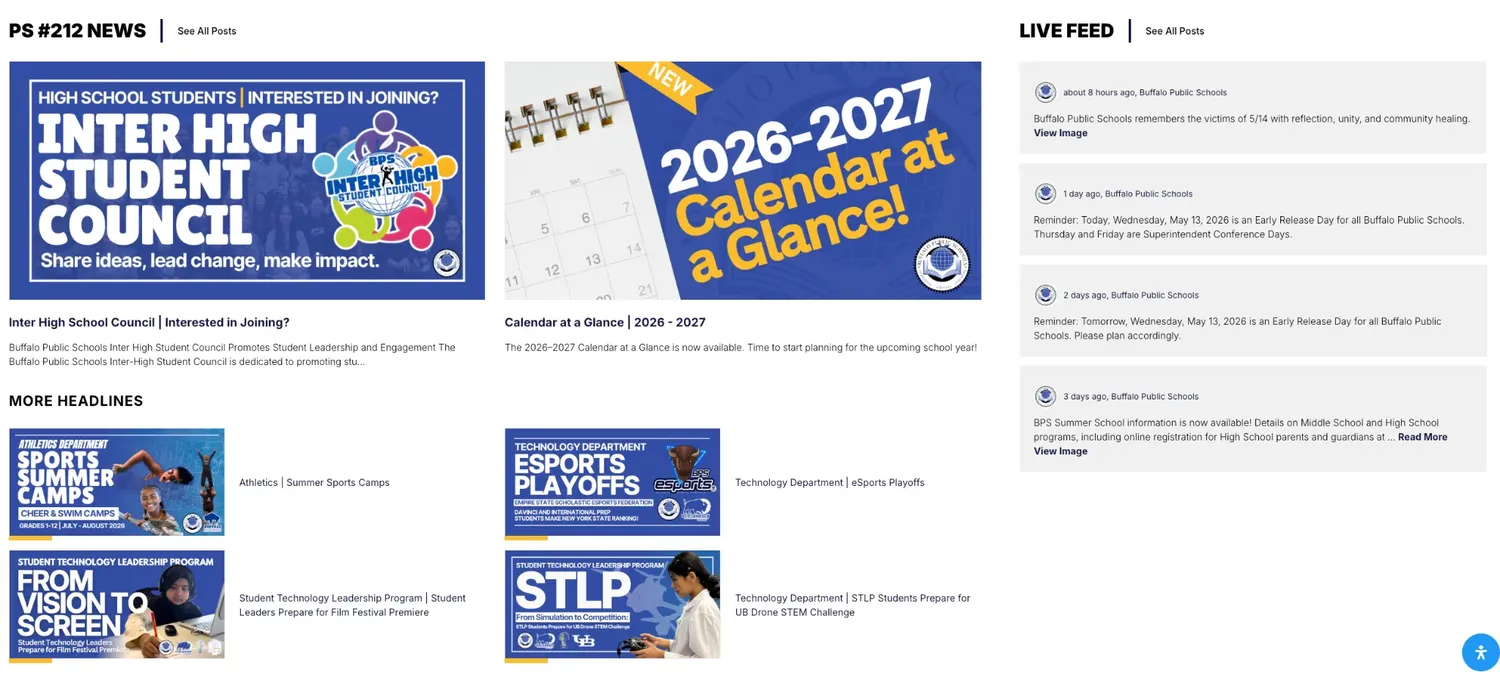
The homepage became intentionally focused. Student recruitment and staff recruitment moved to the forefront, while the rest of the information was reorganized to reduce clutter and confusion.
The district also standardized visual branding across schools using Buffalo’s blue-and-gold identity elements.
That consistency mattered for families, but it mattered internally too.
Despite the district’s size, Buffalo manages nearly 60 school websites with a surprisingly lean team. A two-person web team oversees the broader digital system while school-based editors help maintain content at the building level.
Managing a district that large without standardized tools would have been difficult.
For the BPS Website Team, Apptegy’s platform helped make that scale manageable.
The district needed tools schools could actually use without feeling overwhelmed. They also needed a partner that could help schools stay aligned instead of drifting back into disconnected systems.
“Everybody was all in,” Thompson says. “Once people saw what the platform could do, there was real excitement around it.”
Building-level editors, including instructional technology coaches, administrators, and media teachers, now help manage content across schools. The district supports those teams through monthly training newsletters, accessibility reviews, and ongoing guidance.
The goal is not perfection.
It is consistency.
No matter which Buffalo school a family visits online, the experience should feel familiar and welcoming.
Communication When It Matters Most
In Western New York, communication systems get tested quickly.
Snowstorms, transportation changes, and school closures can affect thousands of families with little warning. District leaders needed a website system that could handle those moments clearly and reliably.
“We wanted to have something where our families could look at the information right from their cell phones,” Thompson says.
That became especially important during emergency situations.
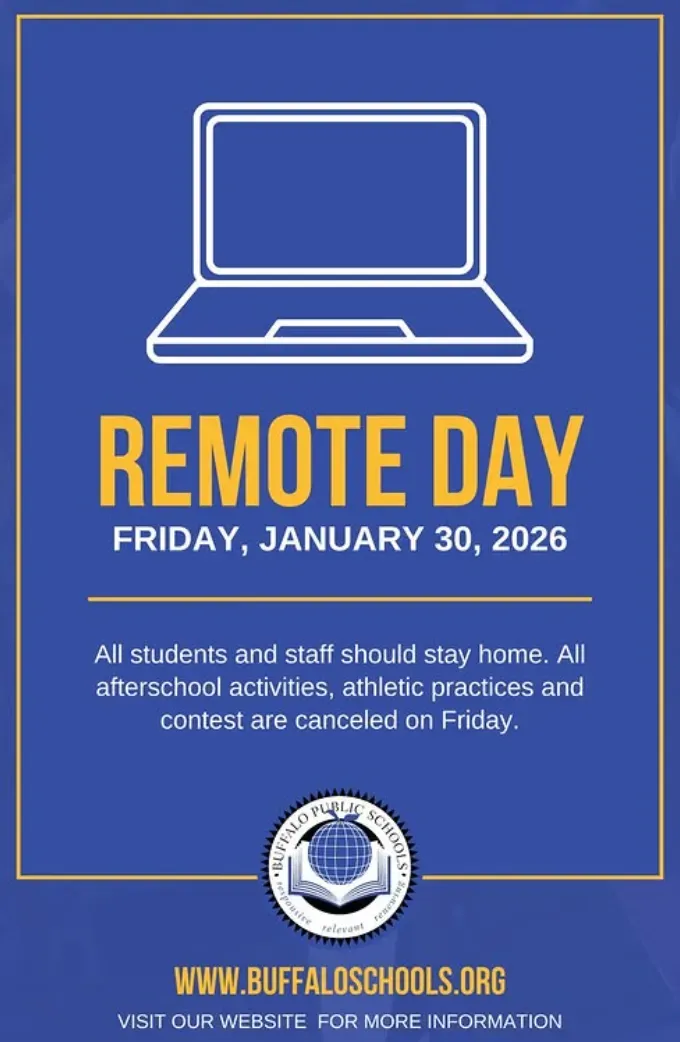
Banner alerts now allow district leaders to post urgent updates directly across district webpages while keeping the experience consistent across devices. Families can quickly find information without searching through multiple platforms or outdated pages.
At the same time, Buffalo strengthened protections behind the scenes, including safeguards around staff email exposure and phishing prevention measures.
Families now rely on the platform daily for school updates, enrollment information, event schedules, and emergency communication.
Telling Buffalo’s Story
As the district’s website became more active, something else started happening.
People began paying attention to Buffalo’s own storytelling.
Local media outlets now regularly pull stories directly from district webpages. School celebrations, arts programs, student achievements, and community initiatives are featured prominently throughout the site.
The website stopped functioning like a static archive.
It became a reflection of the district itself.
That visibility matters in a city where enrollment pressures and demographic changes continue shaping public education.
The district’s registration department is currently undergoing what Thompson describes as a “facelift,” focused on making enrollment easier and more welcoming for families navigating the process for the first time.
Buffalo is also expanding its use of video storytelling and student-created media.

“We’re going to start putting footage on there, like movies,” Thompson says.
The district is also exploring AI-powered chat support to help families access information more quickly.
Giving Back to the District That Raised Her
For Thompson, the work has always felt personal.
She understands Buffalo Public Schools not only as a district leader, but as someone who once sat in its classrooms herself.
That perspective shapes the way she thinks about communication.
A parent trying to check a snow-day alert. A multilingual family navigating enrollment for the first time. A student seeing their school celebrated online. Those moments may seem small, but together they shape how families experience the district.
Four years after partnering with Apptegy, Buffalo Public Schools now operates with one connected communication platform across nearly 60 schools. Between March 2025 and March 2026, the district saw a 28% increase in new website users as more families turned to the site for updates, enrollment information, and school news.
What once functioned as a static website now feels more like the district’s digital heartbeat, connecting families and schools across Buffalo every day.
“We wanted to see if we still had some giddy up,” Thompson says with a laugh.
Several years later, the answer feels obvious.
Buffalo Public Schools did not just modernize its website system.
It rebuilt the digital front door to one of New York’s most diverse school communities.