“It’s like everybody is against me sometimes.”
Roxanne Perry says it plainly, without bitterness. Fourteen years in the East Aurora Union Free School District will teach you to carry the weight.
In East Aurora, excellence isn't just a goal: it’s tradition.
Nestled just south of Buffalo, the East Aurora Union Free School District sits at the heart of a community that defines itself by its character. It’s a place of historic charm and high expectations, where families move specifically for the caliber of the schools. For Roxanne Perry, meeting those expectations isn't a challenge to be managed; it’s an opportunity to innovate.
There is no communications director. There is no communications team. There is Roxanne. She is a Junior System Administrator, Webmaster, and Social Media Coordinator all wrapped in one.
For years, that meant managing Facebook, Twitter, Instagram, YouTube, and the district website alone. Every update rebuilt from scratch, platform by platform. Every message, duplicated. Every post, a small act of labor.
And underneath all of it, a deeper problem: the district wasn’t speaking with one voice. It wasn’t really speaking with any coherent voice at all.
“We didn’t even have an official Facebook page. There were like five pages claiming to be us.”
Different logos. Different messages. Different versions of reality. Before East Aurora could build trust with its community, it had to reclaim its own story. That meant going through the slow, painful process of identifying unofficial pages, attempting to get them taken down and consolidating everything into a single, authoritative presence.
“Getting everyone to agree to one voice,” she says, “and then actually doing it was a huge undertaking. But we got there.”
More Channels, More Chaos
East Aurora’s challenge looked like a staffing problem on the surface. One person doing too much. Too many platforms to manage. But the deeper issue was structural.
When communication is scattered across unofficial pages, rebuilt channel by channel, and impossible to coordinate, it doesn’t just slow down. It stops being trustworthy. Communities begin to wonder which version is real. And in a tight-knit town where the rumor mill operates at full speed, that uncertainty has consequences.
“When the rumor mill starts, there’s no shutting it down,” Roxanne says. “In a small community like this, it ramps up fast.”
The seasonal pressure point is budget season. East Aurora is a high-tax community. Voters without children still vote. And when skeptical voices organize, a district without a unified, proactive communication strategy is already behind.
Roxanne knew the problem. She needed the infrastructure to fix it.
One Post. One Button. Everywhere.
The Apptegy unified communications platform changed the mechanics of the job. Not by adding tools, but by replacing all of them.
Where Roxanne once managed separate logins, separate workflows, and separate publishing steps for each channel, she now had one place to build a message and one action to send it everywhere.
“I can submit one post, hit one button, and it goes everywhere. I don’t have to go to Facebook, then Instagram, then X. It’s all right there.”
On a busy week, she estimates the Apptegy platform saves her hours. But the more important shift wasn’t just efficiency. It was message control. For the first time, East Aurora had one official presence, one consistent voice, one source of truth for its community. We are finally telling our story.
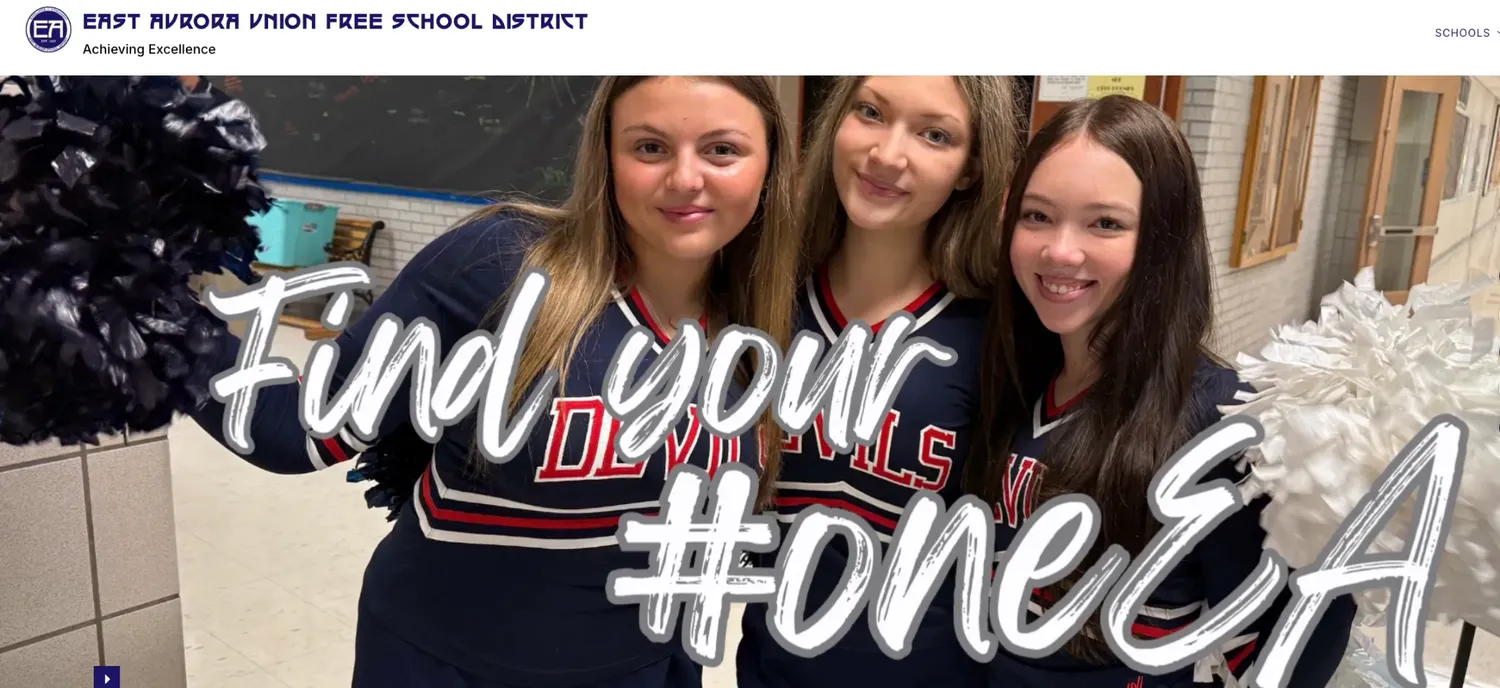
The district’s brand came with it. The “One EA” identity now clearly visible on the district website, printed on t-shirts, threaded through every post and hashtag. it has become more than a tagline. It is a brand posture. One school district. One community. One voice.
She wants to do another merch push, actually. She reminded herself mid-conversation to write it down.
1,700 | Students district-wide |
5+ | Unofficial Facebook pages consolidated into one |
Hours | Estimated time saved through unified publishing on a busy week |
Year 3 | of Apptegy partnership |
Who Is Actually Listening?
Once Roxanne had breathing room, she did something communications professionals rarely have time to do. She looked deeper into the data.
She is, as she puts it, “an analytics girl.” Her background is in tech. Data drives her decisions. And what the analytics told her reframed everything.
“Most of our followers are our students.”
If students were the primary audience, the question wasn’t how to reach them. It was how to engage them. And the answer wasn’t to mimic their voice. It was to hand them the microphone.
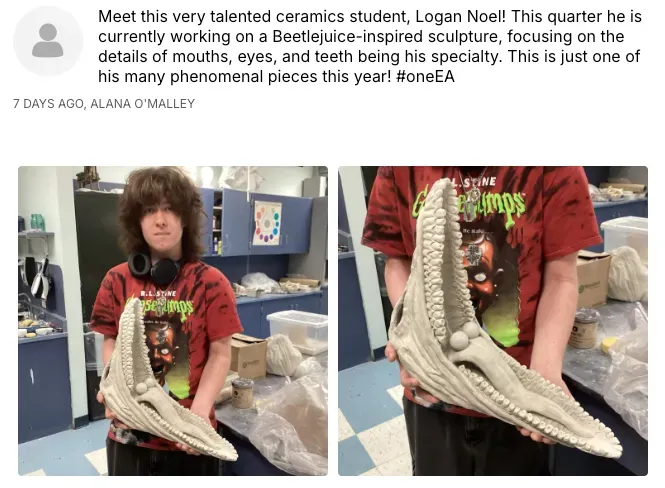
The Most Underrated Storytellers In The District
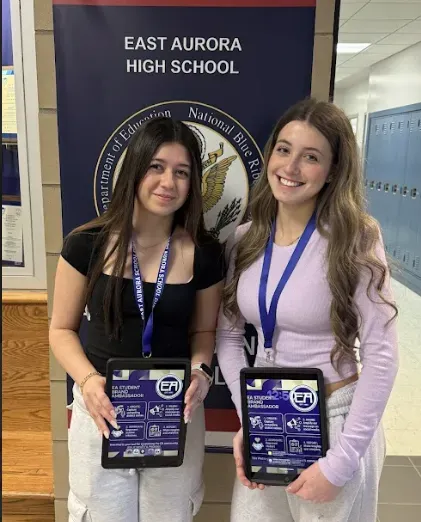
Three weeks before this story was written, Roxanne launched the East Aurora Student Brand Ambassador program. Two high school students were given two iPads — a notable privilege in a state that has banned student phones in schools. They had one simple mission: go get content.
“They’re already creating content every day,” she says. “Why aren’t they creating it for us?”
Getting there required navigating some institutional skepticism. When Roxanne proposed the idea, the response from administration was essentially: “I think we need to meet about this.” Her answer was simple: “Don’t forget — everything they post is moderated.” That was the end of the objection.
The students were tasked with covering what Roxanne cannot: the basketball games, the school dances, the in-between moments that define what a school actually feels like from the inside. With built-in approval workflows in the Apptegy platform, she could extend the access without surrendering control.
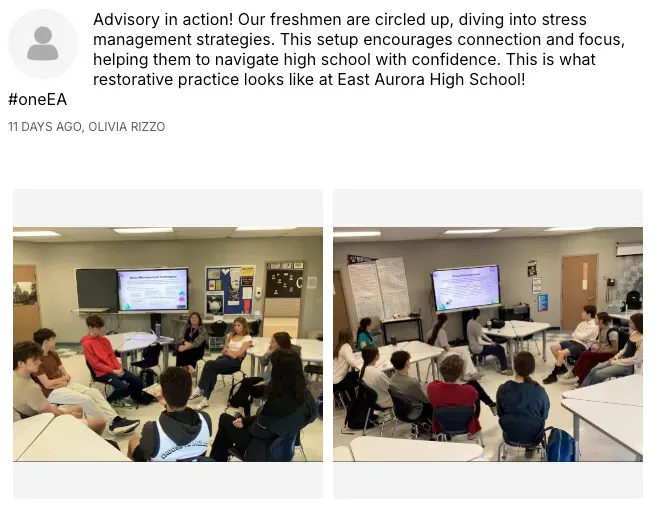
"I love that I can moderate it. I don't have to worry."
What surprised her most wasn’t the content. It was the hunger behind it.
The ambassadors wanted to know how to craft a post. How to say something better. What to include and what to cut. Roxanne found herself teaching an impromptu course in communications strategy — to an audience that actually wanted to learn.
“Nobody ever asks me how I come up with what I post,” she says. “Nobody cares. But these two girls, they wanted to know. So I told them: I run everything through two lenses. Our values and vision. And what we’re trying to accomplish. That’s how it comes out.”
It turned into a pop-up lesson on marketing. She loved every minute of it.
The platform became a teaching layer. The program became a pipeline. And somewhere in that exchange, the communications bottleneck became a network.
Why Student Voice Wins Budget Season
In East Aurora, the annual budget vote is a test of community trust. High taxes. Vocal skeptics. And a sizable population of residents without children in the schools who nonetheless determine the outcome.
Roxanne has learned that policy arguments don’t move this audience. Stories do.
“The only way to quiet those negative voices is to make student voices louder. Because it’s harder to argue with the students.”
Students don’t debate. They show. They show what school actually looks and feels like from the inside. They show outcomes, relationships, and moments that no press release can manufacture.
With Apptegy, those stories move instantly. A student captures a moment, it clears the approval workflow, and within minutes it’s on the district website, across social channels, and in the community feed. Speed, in this case, is strategy.
“Get something out there first,” Roxanne says. “Even if you don’t have all the details, people need to know you’re on it.”
And she’s equally deliberate about what she doesn’t publish. Being one person managing the district’s entire voice means being thoughtful about volume. When she puts something out, she wants a parent or student to stop mid-scroll and think: what is that? Content for its own sake isn’t content, it’s clutter.
For the audience that doesn’t have children in the schools, Roxanne went further. She launched a podcast. One of her guests was a well-respected local real estate agent. The conversation: the relationship between school quality and home values.
“Why should you support the schools if you don’t have kids here?” she asks. “Because it affects your property value. That’s why people are moving here.”
The Content That's Hiding in Plain Sight
There’s a quieter problem Roxanne identified that most districts never see coming.
Teachers were creating content. Good content: classroom moments, student milestones, everyday school life. But it was all going directly to the platform’s parent two-way communication tool, flowing to parents of their specific students and nowhere else. As a result, Roxanne noticed building-level social media and live feed posts had actually gone down. It was not because teachers stopped caring, but because they were already posting. Just somewhere the broader community couldn’t see.
“They’re dumping all that content in there,” she says. “But then nobody else gets to see it.”
The teachers aren’t wrong. Their job is the parent relationship. What they need is a bridge. A plan to let that same content reach the community without adding steps to an already full day. It’s the next frontier.
Scaling the voice without losing it
The student ambassador program is already marked for expansion. Middle school is next. The application process, the iPad incentive, the approval workflow all of it works. The model is scaleable.
And someday, Roxanne points out, one of these students might become her successor. You do the math on what it means to spend your high school years learning how to craft compelling content and tell a community’s story at scale. That is the impact that happens when a communications force like Roxanne pairs with a partner like Apptegy.
Three Things Any District Can Do:
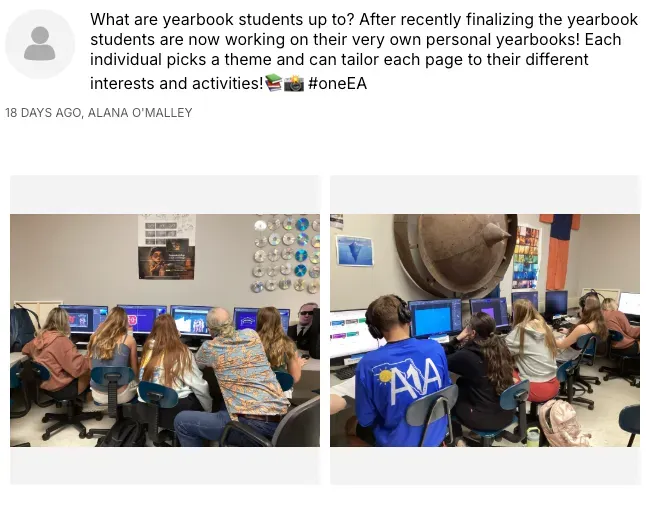
Partner with the yearbook club. Those students already think in terms of photography, storytelling, and content. They’re the fastest path to an ambassador program that works.
2. Use an application process. The students who take the time to apply are the ones who will take the work seriously. Self-selection is a quality filter.
3. Give them something to work for. In East Aurora, an iPad in a phone-free school is a meaningful incentive — not just a perk, but a genuine status symbol. In your district it might be something else. The principle is the same: they’re doing a real job. Treat it that way.
East Aurora Central School District serves approximately 1,700 students across three schools in East Aurora, New York, 30 minutes outside Buffalo. Roxanne Perry has been with the district since 2010.