SB123 is live. Is your attendance team ready?
Starting June 1, 2026, Georgia requires attendance review teams, tiered intervention plans, and clean chronic absence reporting. Most districts are trying to do that with spreadsheets and whoever has time this week.
Attendance Pro automates the workflow SB123 demands — so your team can spend less time compiling reports and more time actually reaching families.

Monthly meetings need monthly data. Do you have it?
SB123 requires attendance review teams to meet monthly with intervention plans for students missing 10%+ of school days — and written policies in place by June 1,2026. That's a real cadence now, not a once-a-semester scramble. Which means the data feeding those meetings has to be ready every single month, not assembled the week before.
Your biennial report is due, but your data is in twelve places.
Attendance and school climate committees must meet twice a year, and districts submit biennial reports on attendance and discipline starting in 2026. If that data lives across spreadsheets, sticky notes, and attendance-clerk memory, report season becomes a fire drill. It shouldn't be.
SB123's real shift: from punishing absences to understanding them
The law treats chronic absence as something to support, not punish. That's good, but that only works if your tools match the posture: proactive outreach, real context on why a student's out, and intervention plans built on facts instead of a tally mark.

Monthly meetings need monthly data. Do you have it?
SB123 requires attendance review teams to meet monthly with intervention plans for students missing 10%+ of school days — and written policies in place by June 1,2026. That's a real cadence now, not a once-a-semester scramble. Which means the data feeding those meetings has to be ready every single month, not assembled the week before.
Your biennial report is due, but your data is in twelve places.
Attendance and school climate committees must meet twice a year, and districts submit biennial reports on attendance and discipline starting in 2026. If that data lives across spreadsheets, sticky notes, and attendance-clerk memory, report season becomes a fire drill. It shouldn't be.
SB123's real shift: from punishing absences to understanding them
The law treats chronic absence as something to support, not punish. That's good, but that only works if your tools match the posture: proactive outreach, real context on why a student's out, and intervention plans built on facts instead of a tally mark.
What Attendance Pro Does
Stop tracking manually. Start intervening early.
Catches patterns before they become chronic — AI flags students trending toward the threshold, not after they've crossed it.
Texts families automatically — same-day, multilingual, no manual dialing.
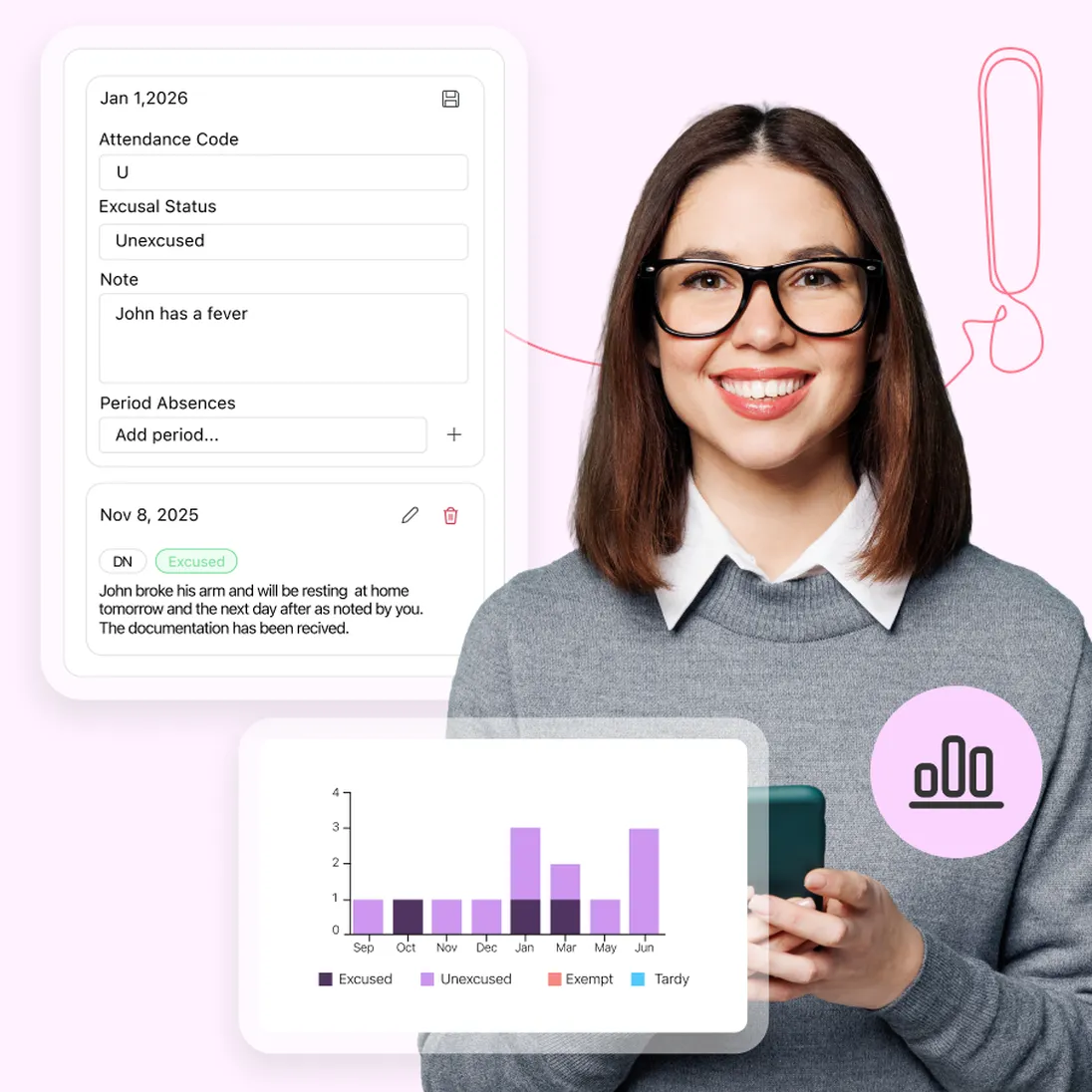
Gets the real story — guided AI conversations capture why a student's out, so intervention teams have context, not just a code.
Builds your report for you — every absence timestamped, coded, and exportable, ready for your biennial submission with one click.
Works with your existing SIS — no rework, no new system, no extra login.

Three things to do this month (not in the spring)
1. Pick your system now. Attendance Pro works with your existing SIS and activates in weeks, not semesters.
2. Decide who sees what. Map out who needs visibility into chronic absence flags before your first monthly review meeting.
3. Run a test report today. Export your data now — find the gaps before your biennial report is due, not after.
Already using Apptegy? You're ahead of the game!
Attendance Pro lives inside the platform your district already trusts. No new vendor, no new login, no separate system for staff to learn — just a feature you turn on.

Apptegy Platform: Designed for K-12 Communications
As districts operationalize their SB123 policy, Apptegy's platform stands out as purpose-built for seamless and automated absence coding and tracking. Designed for K-12 use and built with exceptional user experience in mind, Apptegy can:
Automate the work that drains staff capacity in both attendance follow-up, documentation, and reporting.
Reach every family and get instant responses, with two-way SMS and messaging that sends automatically and feels like a natural conversation in families' preferred languages.
Surface early-warning signals on attendance risk, so districts can act before a pattern becomes chronic.
What does attendance administration really cost your district?
Estimate the staff time and cost tied up in manual attendance follow-up today.


FAQ
SB123 took effect June 1, 2026. Most districts can activate Attendance Pro, customize notification templates, and test their state reporting within 4–6 weeks.
Take the next easy step and build your readiness plan
Every district's setup is different — your SIS, your staffing, your family demographics, your current communication channels.
That's why we recommend starting with a personalized conversation.
We'll learn your district's specific situation, share insights from districts we've already partnered with nationwide, and help you build a realistic timeline for SB123 readiness.
This content was created to help Georgia school leaders understand the implications of SB123 and how Apptegy's solutions address related attendance needs. This is not legal advice. For specific legal guidance regarding SB123 compliance, districts should consult with their legal counsel.